
If you’ve already decided not to live at home while studying, the next question is usually how you want to live, not whether you should move out.

Shared student accommodation is one of the most common choices in the UK. It can be cheaper than living alone, more flexible than halls, and more social than renting a studio, but it isn’t the right fit for everyone. The reality depends on who you live with, what’s included in the rent, and how comfortable you are sharing space.
This guide breaks shared student accommodation down in practical terms. We’ll explain what it actually involves, outline the main pros and cons, look at typical costs, and highlight what to check before you commit. The aim isn’t to sell one option over another, just to help you decide whether shared accommodation makes sense for you.
What Is Shared Student Accommodation?
Shared student accommodation usually means renting a private bedroom within a property that you share with other students. You’ll have your own room, but most other spaces are communal.
In a typical shared student flat or house, this includes:

- A private, lockable bedroom
- A shared kitchen
- A shared bathroom (sometimes more than one)
- Shared living or dining space, depending on the property
- 3 – 6 students in total (though some houses are larger)
It’s important to clear up a common point of confusion early:
- Shared student accommodation is not the same as university halls: Halls are managed by universities or large operators and usually include on-site staff and fixed-term contracts.
- Shared accommodation is also different from studios or PBSA studios: Studios are self-contained. Shared accommodation always involves shared facilities.
Most shared student accommodation is found in private houses or flats (often HMOs) rented through landlords or agents. It’s especially common for second- and third-year students, but some first-years choose this option too, usually for cost or location reasons.
If you’re wondering “what does shared accommodation actually involve day to day?”, the short answer is: your own room, shared responsibility, and shared space, with the experience shaped heavily by who you live with and how the property is managed.
Types of Shared Student Accommodation
Shared student accommodation isn’t one single format. It covers a few different property types, each with slightly different costs, layouts, and living experiences. Understanding the differences helps you compare options properly and avoid surprises later.
Shared Student Houses
Shared student houses are the most traditional form of student accommodation.

- Usually, private houses are rented from landlords
- Common with second- and third-year students
- Bedrooms are private; kitchens, bathrooms, and living areas are shared
- Often located in established student neighbourhoods
- Usually cheaper than halls or PBSA
- Bills are sometimes excluded, so costs vary month to month
These properties offer the most independence but also the most responsibility. You’ll typically manage bills, cleaning, and house issues together.
Shared Student Flats
Shared student flats are similar to houses but located within apartment-style buildings.

- Can be purpose-built or converted residential blocks
- Typically, smaller groups (2 – 4 students)
- More common in city centres
- May feel more modern than older houses
- Bills may be included or excluded depending on the landlord
These suit students who want shared living without a large household, often with better location convenience.
Private Shared Accommodation (PBSA Cluster Flats)
PBSA cluster flats sit between traditional house shares and full student halls.

- Private ensuite bedrooms
- Shared kitchen (usually 4 – 6 students)
- Located in professionally managed student buildings
- Bills included, fixed weekly cost
- Higher rent, but simpler budgeting
This option is popular with students who want shared living without dealing with bills, maintenance, or landlord coordination, while still keeping a social setup.
Pros of Shared Student Accommodation
Shared student accommodation remains popular for good reason. For many students, it strikes a practical balance between cost, independence, and social life.

- Lower rent than studios or solo flats, especially outside city centres
- Built-in social interaction, which can make settling into a new city easier
- Shared bills (where included or split) reduce individual monthly costs
- Larger kitchens and communal spaces compared to most studios
- Easier transition after the first year, especially when moving out of halls
For students who value affordability and don’t mind sharing everyday spaces, shared accommodation can be a sensible and flexible option.
Cons of Shared Student Accommodation
While shared student accommodation works well for many, it isn’t the right fit for everyone. Being clear about the downsides helps you decide whether it suits your lifestyle before you commit.

- Less privacy than living alone, particularly in shared kitchens and bathrooms
- Noise differences, with housemates on different schedules or social habits
- Cleaning responsibilities, which rely on everyone pulling their weight
- Conflicting routines, such as early lectures vs late nights
- Shared responsibility for damage or bills, depending on the contract and whether utilities are included
These issues don’t make shared accommodation a bad choice, but they do mean it requires compromise, communication, and realistic expectations from everyone involved.
How Much Does Shared Student Accommodation Cost?
There isn’t a single “average” price for shared student accommodation in the UK, and any guide that gives one is usually oversimplifying. Costs vary widely depending on where you live, what type of property you choose, and what’s included in the rent.
What usually affects the cost most:

- City and location: Large cities and strong student markets cost more than smaller towns
- Property type: houses are often cheaper than purpose-built flats
- Room setup: Ensuite rooms usually cost more than shared bathrooms
- Number of people sharing: more housemates often means lower individual rent
In general, shared student accommodation is cheaper than studios or solo flats because you’re splitting space, facilities, and sometimes bills. However, the headline rent doesn’t always tell the full story.
A lower weekly rent can become more expensive overall once utilities and extras are added, which is why understanding what’s included matters just as much as the rent itself.
What’s Usually Included
Most shared student accommodation will include:

- Rent for your private bedroom and shared spaces
- Furniture, such as a bed, desk, storage, and seating
- Sometimes utilities, particularly in private shared PBSA cluster flats
- Sometimes the internet, though this varies by landlord or provider
Always check the listing or contract carefully; inclusion varies a lot between properties.
What’s Often Extra
Depending on the accommodation type, you may need to budget separately for:
- Utilities (gas, electricity, water)
- Internet, if not included
- TV licence, if watching live TV or streaming BBC iPlayer
- Cleaning, especially if communal cleaning isn’t provided
Council tax is usually not payable by full-time students living only with other students, but edge cases can apply if non-students are part of the household.
The key takeaway: when comparing shared student accommodation, focus on the total weekly cost, not just the rent.

Shared Accommodation vs Other Student Housing Options
Shared student accommodation sits somewhere in the middle of the student housing spectrum. Here’s how it compares at a high level to other common options, without going into the deep detail covered in our dedicated guides.
Shared Accommodation vs Student Halls
Student halls are usually more structured, with fixed contracts, on-site support, and bills included. Shared accommodation typically offers more independence and lower rent, but with greater responsibility for bills, cleaning, and day-to-day issues.
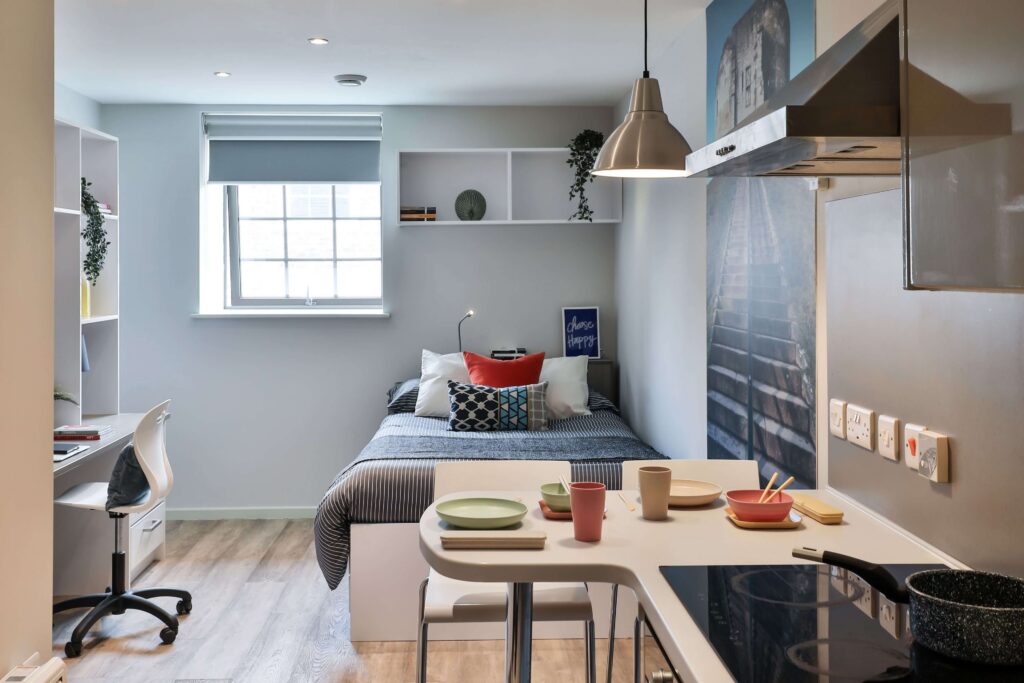
Shared Accommodation vs Studios
Studios offer maximum privacy, with your own kitchen and bathroom, but they’re usually the most expensive option. Shared accommodation costs less and provides more space overall, but involves compromising on privacy and shared routines.

Shared Accommodation vs Living at Home
Living at home is usually the cheapest option and removes most housing risk, but can limit independence and social immersion. Shared accommodation offers a balance between cost, independence, and student life, especially for those ready to live away from home without the price of solo living.
This light comparison helps clarify where shared accommodation fits, without replacing deeper guides on each option.
Who Is Shared Student Accommodation Best For?
Shared student accommodation works well for certain students, but not everyone. The key is matching the setup to how you actually live day to day.
Shared accommodation is often a good fit for:
- Students who prioritise cost over privacy and want lower rent than studios or solo flats
- Second- and third-year students who are comfortable living independently
- Social but self-sufficient students who enjoy company but don’t need organised social spaces
- Students compare fortable sharing kitchens, bathrooms, and communal areas
- Those happy managing bills, cleaning, and shared responsibilities
Who It May Not Suit
Shared student accommodation may be less suitable if you need guaranteed quiet, prefer complete control over your space, or feel stressed by shared routines and responsibilities. Students who value privacy above all else, or who struggle with unpredictable noise and cleanliness standards, often find studios or managed halls a better fit.

This honest self-check helps avoid choosing shared accommodation for the wrong reasons, and ending up wanting to move mid-year.
What to Check Before Choosing Shared Student Accommodation
Before you commit, it’s worth slowing down and checking the practical details. These points have a big impact on cost, comfort, and day-to-day stress, and they’re often missed when students focus on rent alone.
Key questions to check before you choose:
- How many people share the kitchen? A flat with 3–4 students feels very different from one shared by 8–12.
- Is the bathroom shared or ensuite? Shared bathrooms lower rent, but affect privacy and morning routines.
- Are bills included in the rent? If not, ask which utilities are extra and how they’re split.
- Is it an individual or joint contract? Joint contracts can make you responsible if a housemate leaves or doesn’t pay.
- Who handles maintenance and repairs? Check response times and whether issues are managed by a landlord, agent, or on-site team.
- What’s the length of the tenancy? Many shared homes run for 10–12 months, not just term time, which affects the total cost.
This checklist helps avoid the most common issues students run into with shared accommodation, and makes it easier to compare options properly, not just by headline rent.
Final Thoughts: Is Shared Student Accommodation Right for You?
Shared student accommodation works well for a lot of students, but it isn’t a one-size-fits-all solution.

If keeping costs down, sharing space, and living with other students feels like a positive trade-off, shared accommodation can be a practical and flexible choice. For others, privacy, quieter living, or predictable monthly costs may matter more, making different options a better fit.
The most important step is to compare your options honestly. Look beyond weekly rent, check what’s included, and think about how you actually want to live day to day, not just what looks good on paper.
There’s no “right” choice, only the one that suits your budget, lifestyle, and stage of study.