
Stoke-on-Trent is one of the more affordable UK cities for student accommodation, making it worth considering if you’re studying at the University of Staffordshire or Keele University.
According to UniHomes’ 2026/27 rental research, Stoke-on-Trent had the lowest average advertised student rent among the UK cities included in its study, at £121 per week including utility bills. That’s approximately £524 per calendar month, although the figure only reflects properties advertised through UniHomes rather than every student property in the city.

Of course, rent is only part of your monthly spending. Groceries, transport, socialising and everyday essentials all need to be factored in, particularly if you’re moving away from home for the first time.
In this guide, we’ll break down the cost of living in Stoke-on-Trent for students, compare accommodation options and explore three realistic monthly budgets to help you plan for the 2026/27 academic year.
You can also explore student accommodation in Stoke-on-Trent to see what accommodation options are available.
How Much Does It Cost to Live in Stoke-on-Trent as a Student in 2026/27?
Stoke-on-Trent offers relatively affordable student living costs compared with many larger UK university cities. However, your monthly budget will depend on where you live, the accommodation you choose and how you manage everyday spending.
Average Monthly Student Living Costs
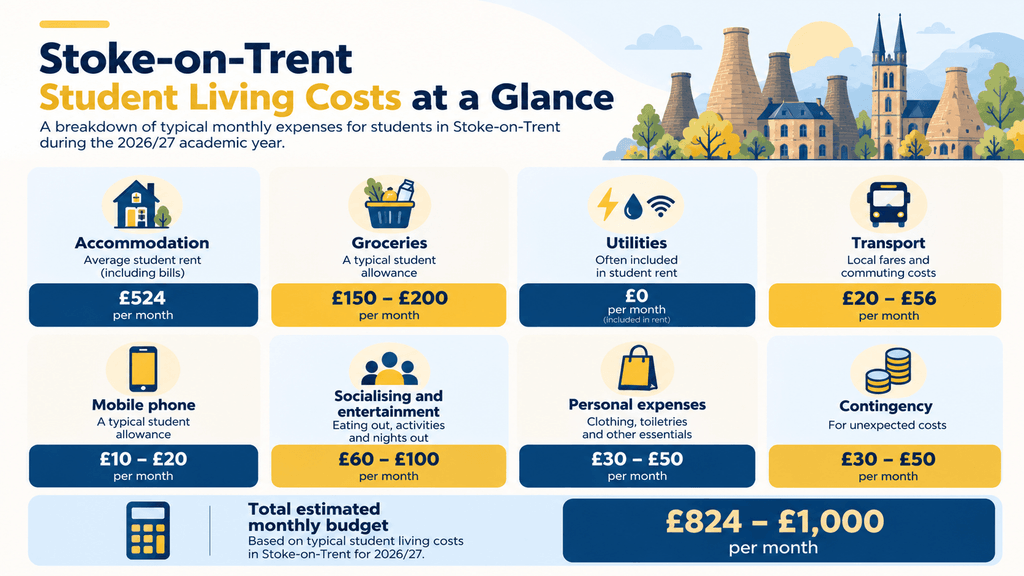
The table below provides an illustrative monthly budget for a student living in bills-inclusive accommodation during the 2026/27 academic year.
| Expense | Estimated monthly cost |
| Accommodation (including utilities) | £524 |
| Groceries | £150 – £200 |
| Utilities | £0 (included in rent) |
| Transport | £20 – £56 |
| Mobile phone | £10 – £20 |
| Socialising and entertainment | £60 – £100 |
| Personal expenses | £30 – £50 |
| Contingency and unexpected costs | £30 – £50 |
| Total estimated monthly budget | £824 – £1,000 |
These figures are planning estimates rather than verified citywide student averages. Accommodation is based on UniHomes’ £121 weekly advertised rental benchmark, converted to approximately £524 per calendar month. The grocery allowance is informed by Wise’s £198 monthly general-population estimate, while the transport range uses Wise’s £56 general spending estimate as a reference point. Other allowances are illustrative. Actual costs will vary, and local student transport fares should be checked before publication.
For a broader explanation of managing university expenses, explore our student budgeting guide.
What Affects Your Monthly Budget?
Several factors influence how much you’ll spend while studying in Stoke-on-Trent.
Accommodation type: Shared houses and en-suite rooms can offer lower costs than self-contained studios.
Bills: All-inclusive accommodation provides predictable payments, while private rentals may require separate contributions towards electricity, heating, water and broadband.
Location: Living within walking distance of the University of Staffordshire can reduce commuting expenses.
Groceries and socialising: Cooking at home, shopping strategically and making use of student discounts can help keep everyday spending manageable.
Tenancy length: A lower weekly rent doesn’t necessarily mean a cheaper overall contract. Always compare the total cost across your tenancy.
Understanding these differences will help you choose accommodation that suits both your lifestyle and your budget.
Three Realistic Monthly Student Budgets in Stoke-on-Trent
How much you spend as a student in Stoke-on-Trent largely depends on your accommodation, lifestyle and everyday spending habits. To help you plan, we’ve created three realistic monthly budgets for the 2026/27 academic year, covering everything from affordable shared housing to private studio accommodation.
These are illustrative student budgets, not official averages. They demonstrate how different accommodation choices and spending habits can affect your overall living costs.
Budget 1 – Living on a Tight Student Budget
Estimated monthly cost: £680
This budget suits students who prioritise affordability, choose shared accommodation and keep discretionary spending relatively low.
With shared housing budgeted at £390 per month, plus £50 towards utilities, accommodation represents the largest expense. Cooking most meals at home, shopping at affordable supermarkets and walking or cycling to university can help keep costs manageable.
This approach may particularly suit students living close to the University of Staffordshire in areas such as Shelton.
Budget 2 – A Typical Student Lifestyle
Estimated monthly cost: £950
This scenario represents a student living in bills-inclusive en-suite accommodation, balancing everyday essentials with a reasonable social budget.
Accommodation is budgeted at £550 per month, with utilities included. Groceries, occasional public transport, entertainment and personal expenses make up the remaining spending.
Bills-inclusive accommodation can be particularly helpful when managing a fixed monthly budget because heating, electricity and other included utilities don’t need to be calculated separately.
Budget 3 – Studio Living and a Higher Monthly Budget
Estimated monthly cost: £1,350
Students who prefer greater independence may choose a self-contained studio with private kitchen and bathroom facilities.
This example allows £800 per month for studio accommodation, with utilities assumed to be included, alongside a larger grocery, entertainment and personal spending budget.
It provides more flexibility for eating out, social activities and occasional travel, although actual studio prices and inclusions will vary.
Monthly Student Budget Comparison
| Monthly expense | Budget student | Typical student | Studio student |
| Rent | £390 | £550 | £800 |
| Utilities | £50 | £0 (included) | £0 (included) |
| Groceries | £120 | £160 | £200 |
| Transport | £0 | £30 | £60 |
| Mobile phone | £10 | £15 | £20 |
| Socialising | £40 | £90 | £130 |
| Personal expenses | £40 | £55 | £80 |
| Contingency | £30 | £50 | £60 |
| Total monthly budget | £680 | £950 | £1,350 |
All figures are illustrative monthly planning allowances, not verified student spending averages or live property quotations. The shared-house example assumes separately payable utilities, while the en-suite and studio examples assume bills-inclusive rent. The £0 transport allowance assumes walking or cycling without additional transport expenditure. Actual spending, rent and tenancy payments will vary.
Which Student Budget Is Right for You?
A lower monthly budget doesn’t necessarily mean sacrificing your university experience. Choosing accommodation close to campus, comparing bills-inclusive options and managing everyday spending can make a significant difference.
Before booking, compare the full tenancy cost and what’s included. Explore student accommodation in Stoke-on-Trent to find options that suit your preferences and budget.

Food and Grocery Costs for Students in Stoke-on-Trent
Food is one of the largest regular expenses after accommodation, but it’s also an area where students have considerable control over their spending. With affordable supermarkets, local shopping options and a little planning, eating well in Stoke-on-Trent doesn’t have to stretch your student budget.
How Much Should Students Spend on Groceries?
For 2026/27, a reasonable starting point is to budget £120 – £200 per month for groceries, depending on your eating habits and dietary requirements.
As a reference, Wise estimates average grocery spending in Stoke-on-Trent at approximately £198 per person per month. However, this reflects general living costs rather than student-specific spending.
Students who cook regularly, prepare meals in advance and limit takeaways may spend towards the lower end of this range. Those purchasing convenience foods, following specialist diets or eating out frequently may need a larger allowance.
Affordable Supermarkets and Food Shopping
Students in Stoke-on-Trent can explore several supermarket options, including Aldi, Lidl, Tesco and Sainsbury’s, alongside independent food shops and local markets.
Comparing prices between supermarkets, choosing own-brand products and checking reduced-price sections can help keep grocery bills manageable.
Shopping close to your accommodation can also save money on transport, particularly if you’re able to walk rather than make additional bus journeys.
How to Reduce Your Weekly Food Bill
Small changes to your shopping and cooking habits can make a noticeable difference over an academic year.
- Plan your meals: Create a weekly shopping list to avoid unnecessary purchases.
- Batch cook: Prepare larger portions and freeze leftovers for busy university days.
- Choose own-brand products: Compare supermarket alternatives before buying premium brands.
- Use student discounts: Check available supermarket, restaurant and food delivery offers.
- Reduce food waste: Store ingredients properly and plan meals around food you already have.
For more practical ideas, explore our healthy meal planning guide for busy students or learn how to meal plan as a student.
By developing consistent shopping and cooking habits, you can enjoy varied, nutritious meals while keeping your monthly living expenses under control.
Student Transport Costs in Stoke-on-Trent
Transport is an important consideration when calculating the cost of living in Stoke-on-Trent for students. The city is made up of six towns, Stoke, Hanley, Burslem, Tunstall, Longton and Fenton, so travel expenses depend largely on where you live and study.
Getting Around Stoke-on-Trent by Bus
Buses are a practical way to travel between student accommodation, university campuses and local amenities.
First Potteries and D&G Bus operate services across Stoke-on-Trent and surrounding areas, including routes connecting Stoke, Shelton, Hanley and Newcastle-under-Lyme.
Students should compare available single tickets, day tickets and student passes before travelling regularly. Discounts and ticket validity vary by operator, route and eligibility, so checking current fares directly can help you find the most economical option.
Walking and Cycling to University
One of the easiest ways to reduce transport costs is to choose accommodation within walking or cycling distance of campus.
Students attending the University of Staffordshire may find accommodation around Shelton and Stoke particularly convenient, potentially eliminating daily bus fares.
Walking and cycling can also make it easier to access nearby shops, cafés and university facilities without additional travel expenses.
Travelling to Keele University
Keele University’s main campus is located outside central Stoke-on-Trent, meaning students living in Stoke may need to budget for regular bus journeys.
Newcastle-under-Lyme is another popular option for Keele students, offering accommodation closer to the university and access to local shopping and entertainment.
Explore student accommodation in Newcastle-under-Lyme to compare available options.
Train Travel and Student Discounts
Stoke-on-Trent railway station provides connections to destinations including Manchester, Birmingham and London.
Students who travel home regularly may benefit from a 16 – 25 Railcard, which offers one-third off eligible rail fares, subject to restrictions.
Ultimately, choosing accommodation with convenient university connections can make a meaningful difference to your overall monthly student budget.
How Much Does Socialising Cost in Stoke-on-Trent?
University life isn’t just about lectures and studying. From meeting friends for coffee to exploring local nightlife, social activities are an important part of the student experience. Fortunately, Stoke-on-Trent offers plenty of ways to enjoy yourself without spending excessively.
Eating Out, Coffee and Takeaways
Eating out regularly can quickly increase your monthly living expenses.
According to Wise’s general cost-of-living estimates, a coffee in Stoke-on-Trent costs approximately £3, while monthly dining-out expenditure is estimated at around £173 per person.
These figures reflect general spending patterns rather than student-specific averages or essential expenses.
For students managing a tighter budget, allowing £40 – £100 per month for social activities provides a useful starting point, although individual spending will vary.
Student Nightlife and Entertainment
Hanley is one of Stoke-on-Trent’s main entertainment destinations, offering bars, restaurants, cafés and nightlife venues.
Students can also enjoy cinemas, live music and events organised through university societies.
Joining a student society can be particularly worthwhile, providing opportunities to meet people and participate in activities without relying entirely on expensive nights out.
Free and Low-Cost Activities
Not every social activity needs to involve spending money.
Students can explore Hanley Park, enjoy walks around Westport Lake or visit The Potteries Museum & Art Gallery, where general admission is typically free, although some exhibitions and activities may carry charges.
University societies, campus activities and free student events can provide additional opportunities to socialise affordably.
By balancing occasional nights out with free attractions and lower-cost activities, students can enjoy Stoke-on-Trent’s social scene while keeping their monthly budget under control.
Cheapest Areas to Live in Stoke-on-Trent as a Student
Choosing where to live can make a significant difference to your overall student budget. Stoke-on-Trent offers a variety of neighbourhoods, from areas within walking distance of university to residential locations with potentially lower rental costs.
However, the cheapest student accommodation isn’t always the most affordable option overall. Transport expenses, utility bills and access to everyday amenities should also influence your decision.
Comparing Affordable Student Areas
| Area | Student appeal | Budget consideration |
| Shelton | Close to the University of Staffordshire | Walking to lectures could reduce transport costs |
| Stoke town centre | Railway station, transport connections and student accommodation | Compare rental prices, facilities and included bills |
| Hanley | Shopping, entertainment and nightlife | Consider travel expenses when commuting to university |
| Penkhull | Residential surroundings and local amenities | Compare potentially lower rents against commuting costs |
| Hartshill | Residential accommodation and proximity to Royal Stoke University Hospital | Consider university travel requirements |
| Newcastle-under-Lyme | Popular with Keele University students | Compare accommodation costs and transport connections to campus |
Rental prices vary between individual properties, so these locations shouldn’t be treated as a definitive ranking of the cheapest neighbourhoods.
Is It Cheaper to Live Near Campus?
Living farther from university might reduce your weekly rent, but additional transport expenses can offset those savings.
For example, accommodation costing £10 less per week saves approximately £43 per average calendar month. However, if commuting adds £50 in monthly bus fares, the cheaper property would actually cost around £7 more overall.
Students attending the University of Staffordshire may benefit from living around Shelton or Stoke, while Keele students should consider the journey from Newcastle-under-Lyme.
For further comparisons, explore our guide to the best student areas in Newcastle-under-Lyme.
Ultimately, comparing rent, bills and transport together will give you a clearer picture of which area offers the best value.
Is Stoke-on-Trent Cheaper Than Other UK Student Cities?
One of Stoke-on-Trent’s biggest advantages for students is its relatively affordable accommodation compared with many other UK university cities.
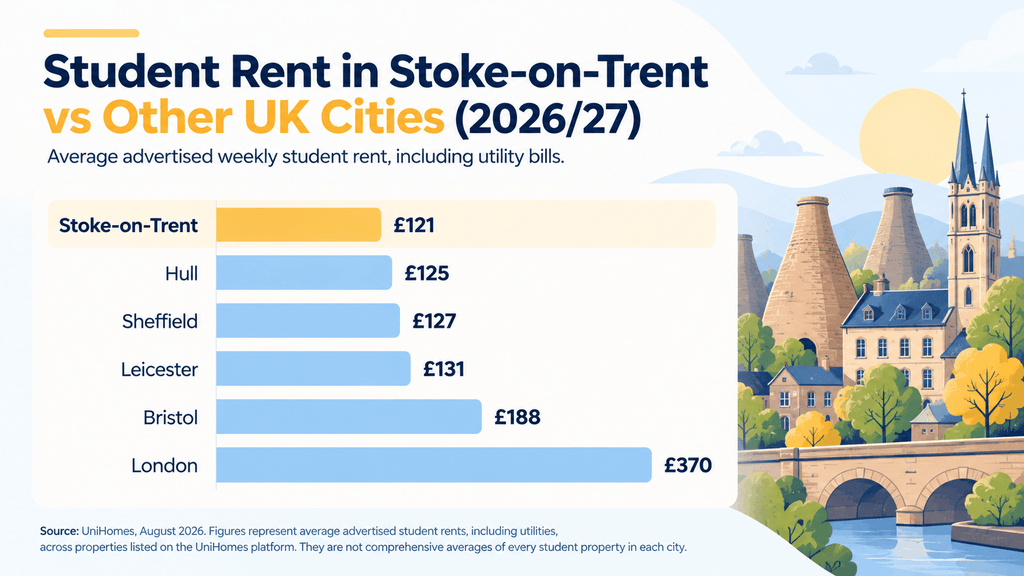
According to UniHomes’ August 2026 research into student rental prices for the 2026/27 academic year, Stoke-on-Trent recorded the lowest average advertised weekly rent among the cities included in its analysis.
Student Accommodation Costs Across UK Cities
| City | Average advertised weekly student rent (including bills) |
| Stoke-on-Trent | £121 |
| Hull | £125 |
| Sheffield | £127 |
| Leicester | £131 |
| Bristol | £188 |
| London | £370 |
Source: UniHomes, August 2026. Figures represent average advertised student rents, including utilities, across properties listed on the UniHomes platform. They are not comprehensive averages of every student property in each city.
At £121 per week, Stoke-on-Trent’s advertised student rent is approximately £67 cheaper than Bristol and £249 cheaper than London.
Over a 44-week tenancy, those differences would represent potential savings of approximately £2,948 compared with Bristol and £10,956 compared with London, based on the reported weekly averages.
However, accommodation is only one part of the overall cost of living. Grocery prices, transport requirements, social spending and individual lifestyle choices can all influence how much students spend each month.
For students comparing university destinations, Stoke-on-Trent’s relatively low advertised rental costs provide a useful starting point when planning an affordable university experience.
Explore student accommodation in Stoke-on-Trent to compare available properties and find accommodation that suits your budget.
If you’re still deciding where to study, it’s worth comparing everyday living expenses alongside accommodation prices. Our cost of living in Leicester for students and cost of living in Sheffield for students guides explore accommodation, groceries, transport and other expenses to help you understand how your budget might differ between university cities.
Upfront Costs Students Should Budget For
When calculating the cost of living in Stoke-on-Trent, it’s important to consider more than your regular monthly expenses. Moving into student accommodation can involve several upfront payments, particularly at the beginning of the academic year.
Planning for these costs early can help you avoid unexpected financial pressure before your university course begins.
Accommodation Deposits and Advance Rent
Depending on your accommodation provider and tenancy agreement, you may need to pay certain costs before moving in.
These can include a refundable tenancy deposit, a holding deposit where applicable, or an initial rent instalment.
Payment schedules also vary. Some accommodation providers offer monthly instalments, while others require termly payments or larger amounts in advance.
Students may also need a UK-based guarantor, particularly when paying rent in instalments. If you’re unfamiliar with these requirements, read our student accommodation guarantor guide.
Moving and Household Essentials
Alongside accommodation payments, remember to budget for everyday essentials, including:
- Bedding, towels and basic kitchen equipment.
- Laundry supplies and cleaning products.
- Travel or moving expenses.
- University course materials and stationery.
- Contents insurance, if not already included.
Check what your accommodation provides before purchasing household items to avoid unnecessary spending.
Avoiding Unexpected Accommodation Costs
Before signing your tenancy agreement, carefully review deposit arrangements, payment deadlines, cancellation terms and any additional charges.
Check whether utility bills, broadband, laundry facilities and contents insurance are included in your rent.
It’s also worth understanding the total tenancy cost rather than focusing exclusively on the advertised weekly price.
For help preparing for university life, explore our moving into student accommodation checklist.
A little preparation can make moving into your new student home considerably easier and more affordable.
Student Finance and Living Costs in Stoke-on-Trent
Understanding how much financial support you may receive is an important part of planning your university budget. While Stoke-on-Trent offers relatively affordable student accommodation, it’s essential to make sure your available funding can cover your living expenses.
Can Maintenance Loans Cover Student Living Costs?
Eligible UK students may receive a maintenance loan to help towards accommodation, food, transport and other everyday expenses.
The amount available depends on individual circumstances, including household income, where you normally live and whether you live at home or away during university.
Maintenance funding may not cover every expense, so some students also rely on savings, part-time employment or additional financial support.
Living at Home vs Renting Student Accommodation
Living with family may reduce accommodation and household expenses, although commuting costs could be higher.
Renting student accommodation provides greater independence but introduces regular rental payments and potentially additional utility bills.
Your living arrangements can also affect your maintenance loan entitlement.
Planning Your Student Budget
Before choosing accommodation, compare your expected student finance payments against your total living costs, including rent, groceries, transport and personal spending.
Remember to consider when funding arrives and when accommodation payments are due.
For a more detailed breakdown of student finance, accommodation expenses and money management, explore our budgeting for student accommodation in the UK (2026 cost guide).
How to Save Money as a Student in Stoke-on-Trent
Living on a student budget doesn’t mean missing out on university life. With relatively affordable accommodation, accessible shopping options and plenty of low-cost activities, Stoke-on-Trent offers several opportunities to manage your spending.
Here are eight practical ways to make your student budget go further during the 2026/27 academic year.
1. Choose Accommodation Close to University
Living within walking or cycling distance of the University of Staffordshire can help eliminate regular bus fares. Keele University students should also consider accommodation with convenient campus connections.
2. Compare Bills-Inclusive Accommodation
Don’t focus exclusively on advertised weekly rent. Accommodation that includes electricity, heating, water and broadband may offer better overall value than a cheaper property with separate bills.
3. Cook More Meals at Home
Shopping at affordable supermarkets, preparing meals in advance and batch cooking can significantly reduce food expenses compared with regularly ordering takeaways.
4. Take Advantage of Student Discounts
Check available discounts through student identification, TOTUM, UNiDAYS and Student Beans. Offers vary between participating retailers, restaurants and entertainment venues.
5. Explore Free Local Attractions
Enjoy walks around Hanley Park and Westport Lake, explore The Potteries Museum & Art Gallery, or participate in free university activities and society events.
6. Compare Tenancy Lengths
A cheaper weekly rate doesn’t always mean a lower total cost. Compare 40, 44, 48 and 51-week contracts, where available, to avoid paying for unnecessary weeks.
7. Set a Realistic Weekly Spending Limit
Calculate how much money remains after essential expenses such as rent and bills. Divide your available spending money across the weeks until your next funding payment to establish a manageable limit.
8. Keep a Contingency Allowance
Set aside a small amount each month for unexpected travel, replacement household items or other unforeseen expenses.
The key to affordable student living is understanding your total costs before committing to accommodation. Small savings across rent, transport, groceries and entertainment can make a meaningful difference throughout the academic year.
Frequently Asked Questions
Based on our illustrative 2026/27 budgets, students in Stoke-on-Trent could plan for approximately £680–£1,350 per month, depending on accommodation and lifestyle. Our budget examples include £680 for affordable shared housing, £950 for bills-inclusive en-suite accommodation and £1,350 for private studio living. These are planning scenarios rather than measured student spending averages.
Yes. Stoke-on-Trent is relatively affordable compared with many UK student cities, particularly for accommodation. UniHomes’ August 2026 research identified Stoke-on-Trent as having the lowest average advertised student rent among the cities included in its 2026/27 analysis.
According to UniHomes’ 2026/27 research, average advertised student rent in Stoke-on-Trent was £121 per week, including utility bills, equivalent to approximately £524 per average calendar month. This reflects properties advertised through UniHomes, not every student property across the city.
Students should consider allowing approximately £120–£200 per month for groceries, depending on their shopping habits and dietary requirements. Cooking at home, batch cooking and choosing supermarket own-brand products can help reduce spending. Takeaways and restaurant meals should be budgeted for separately.
£1,000 per month could be sufficient for many students, depending on their accommodation and lifestyle. Our typical student budget totals £950 per month, including bills-inclusive en-suite accommodation, groceries, transport and social activities. However, students choosing more expensive studios or travelling regularly may need additional funds.
Both locations offer student accommodation at different price points. Stoke may be convenient for University of Staffordshire students, while Newcastle-under-Lyme can offer easier access to Keele University. Comparing rent, included bills and commuting costs is more useful than comparing location alone.
Read our cost of living in Newcastle-under-Lyme for students guide for a more detailed comparison.
Households occupied entirely by qualifying full-time students are generally exempt from council tax. However, eligibility depends on individual circumstances, and properties shared with non-students may be treated differently. Students should check the applicable rules and provide evidence of their student status when required.
International students can reduce expenses by choosing bills-inclusive accommodation, comparing supermarkets, cooking regularly and using available student discounts. Living close to campus can also reduce transport costs.
It’s important to budget for additional expenses such as travel, visa-related costs and initial accommodation payments.
For more information about settling into university life, explore international student accommodation and support at StudentFM.
Find Student Accommodation Within Your Budget in Stoke-on-Trent
Stoke-on-Trent offers a range of accommodation options for students looking to balance affordability, comfort and convenience.
Whether you’re searching for an affordable room close to university or prefer the independence of private accommodation, understanding your total living expenses can help you make a more informed decision.
Before booking, compare weekly rent, included utility bills, property location and tenancy length to find accommodation that suits both your lifestyle and budget.
At StudentFM, we offer student accommodation in Stoke-on-Trent, including Kiln House and Poulson House, providing options for students looking to make the most of university life.
Ready to find your next student home?
Explore Student Accommodation in Stoke-on-Trent
Browse our Stoke-on-Trent accommodation options and explore properties that match your preferences.
Alternatively, Compare Available Student Rooms to discover available accommodation across StudentFM locations.