
Manchester is one of the UK’s largest and most exciting student cities, attracting more than 100,000 students each year to institutions including the University of Manchester, Manchester Metropolitan University and the University of Salford. With such a large student population comes an enormous choice of accommodation, ranging from affordable shared houses and university halls to modern purpose-built student accommodation (PBSA), en-suite rooms and private studios. Whatever your budget, there’s likely to be an option that suits both your finances and your lifestyle.
One of the biggest mistakes students make is assuming that the cheapest room is automatically the best deal. While saving money is important, the lowest weekly rent doesn’t always represent the best value. A room that appears inexpensive may require a long daily commute, charge extra for utility bills or lack facilities that you’ll end up paying for elsewhere. On the other hand, spending a little more on accommodation with bills included, better amenities and a more convenient location can often work out cheaper over the course of an academic year.

Finding great-value student accommodation is about looking beyond the advertised price. It’s important to compare what’s included in your rent, consider transport costs, check contract lengths, understand room types and think about how location will affect your university experience. Taking the time to compare these factors can help you avoid unexpected costs and choose accommodation you’ll genuinely enjoy living in.
In this guide, we’ll explain everything you need to know about finding cheap student accommodation in Manchester. We’ll compare the average cost of different room types, explore the city’s most affordable student neighbourhoods, highlight practical ways to reduce your accommodation costs, explain common hidden expenses and help you decide which type of accommodation offers the best overall value. Whether you’re searching for your first student room or looking to move into private accommodation, this guide will help you make a confident and informed decision.
If you’re ready to start comparing available rooms, explore our Student Accommodation Manchester page. If you’re still weighing up your options, our comprehensive Student Accommodation Guide explains everything you need to know before booking your student home.

What Does Cheap Student Accommodation in Manchester Cost?
One of the first questions students ask when moving to Manchester is, “How much should I expect to pay for accommodation?” The answer depends on several factors, including the type of accommodation you choose, its location, whether bills are included, and the facilities on offer. While Manchester remains more affordable than London, accommodation costs have increased in recent years due to strong demand from one of the UK’s largest student populations.

Fortunately, there are still options available for a wide range of budgets. Whether you’re looking for the lowest possible rent or a premium studio with additional facilities, understanding the differences between accommodation types will help you find the best value for your money.
| Accommodation | Weekly Cost | Best For |
| Shared House | £110 – £170 | Lowest budgets |
| En-suite PBSA | £170 – £240 | Most students |
| Studio | £220 – £330 | Privacy |
| University Hall | £122 – £235 | First years |
Shared Houses (£110 – £170 per week)
Shared houses are usually the cheapest way to live in Manchester and remain the most popular option for second and third-year students. Renting a room in a shared property allows you to split costs with friends while enjoying larger communal living spaces.
Some shared houses include utility bills within the rent, while others require tenants to arrange and pay for gas, electricity, water and broadband separately. Although the weekly rent may appear lower, these additional expenses can significantly increase your monthly budget, so it’s important to compare the total cost rather than focusing solely on the advertised price.
Purpose-Built Student Accommodation (PBSA) (£170 – £240 per week)
Purpose-built student accommodation has become increasingly popular across Manchester thanks to its convenience and all-inclusive pricing. Most PBSA developments include utility bills, high-speed Wi-Fi, contents insurance and access to shared facilities such as study rooms, gyms, cinema rooms and social spaces.
While the weekly rent is generally higher than a shared house, many students find the predictable monthly costs and added amenities provide better overall value. For students moving away from home for the first time, the simplicity of having everything included can also make budgeting much easier.
University Halls (£122 – £235 per week)
University-managed accommodation is often the preferred choice for first-year students. The University of Manchester offers a wide range of halls, with prices varying depending on location, room type and whether accommodation is catered or self-catered.
Shared bathroom rooms typically sit at the lower end of the price range, while modern en-suite rooms closer to campus command higher rents. Most university halls include utility bills, internet access and on-site support, making them a straightforward option for students who want to settle into university life quickly.
Student Studios (£220 – £330 per week)
Studios provide complete independence, with your own bedroom, kitchen and bathroom in a self-contained apartment. They’re particularly popular with postgraduate students, mature students and anyone who values privacy or prefers quieter living.
Although studios represent one of the most expensive accommodation options, the rent usually includes all utility bills and access to the same communal facilities available in many PBSA developments.
One-Bed Apartments
Private one-bedroom apartments are generally the most expensive option and are less common among undergraduate students. In addition to higher rental costs, tenants are often responsible for utility bills, council tax exemptions, broadband and furnishing costs depending on the property.
Unless you’re sharing the cost with a partner or specifically require independent accommodation, purpose-built student studios often provide better value than a standard private apartment.
Understanding the True Cost
When comparing accommodation, it’s important to look beyond the weekly rent. Ask whether utility bills are included, whether you’ll need to pay a deposit, what length of tenancy you’re signing and if there are any additional fees for services or amenities. A room with a slightly higher weekly rent may ultimately prove cheaper if it includes everything you need, whereas a lower-priced property with separate bills can become significantly more expensive over the course of the academic year.
Before making a decision, it’s worth calculating your total monthly living costs rather than comparing rent alone. Our Student Budgeting UK Cost Guide explains how to create a realistic student budget, while our guide to What’s Included in Student Accommodation? outlines exactly what you should expect to receive as part of your rent.

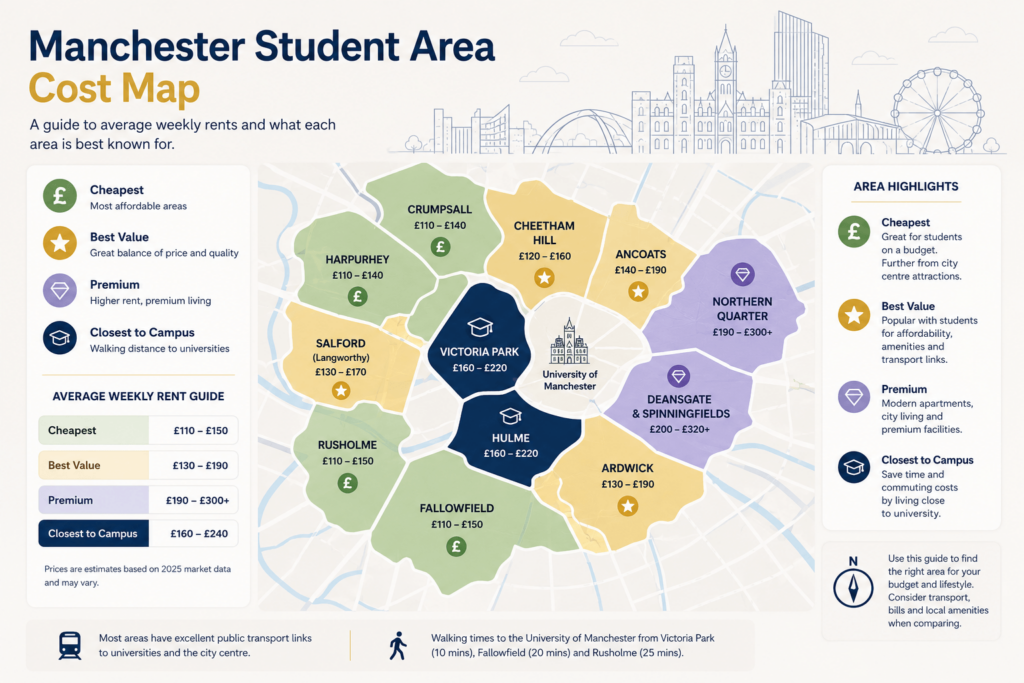
Cheapest Areas to Live in Manchester for Students
Choosing the right area to live in can have just as much impact on your university experience as choosing the right accommodation. While many students naturally focus on finding the lowest weekly rent, location plays a huge role in your overall living costs. An area with slightly higher rent but lower transport expenses and shorter commuting times can often represent much better value over the course of an academic year.

Manchester offers a wide variety of student neighbourhoods, each with its own character, price range and advantages. Some areas are known for their lively student atmosphere and affordable shared housing, while others provide quieter surroundings or easy access to campus and the city centre.
Below are some of the most popular and affordable areas for students living in Manchester.
| Area | Typical Weekly Rent | Walk to University of Manchester | Nightlife | Overall Value |
| Fallowfield | £120 – £180 | 30 – 40 mins | ★★★★★ | Excellent |
| Rusholme | £130 – £190 | 20 – 30 mins | ★★★★☆ | Excellent |
| Victoria Park | £160 – £240 | 15 – 25 mins | ★★★☆☆ | Very Good |
| Hulme | £170 – £250 | 10 – 20 mins | ★★★☆☆ | Very Good |
| Ardwick | £150 – £220 | 15 – 20 mins | ★★★☆☆ | Good |
| City Centre | £220 – £350 | 10 – 20 mins | ★★★★★ | Good |
Fallowfield
Fallowfield has long been considered Manchester’s student hub and is particularly popular with second and third-year students. The area offers a huge selection of shared houses alongside purpose-built student accommodation, making it one of the most affordable places to live while still enjoying a lively student community.

Students are attracted by the wide range of cafés, pubs, supermarkets and takeaways, while regular bus services make travelling to campus quick and convenient.
Pros
- One of the largest student communities in the UK
- Wide choice of affordable shared houses
- Excellent nightlife and social scene
- Plenty of shops and supermarkets
- Strong public transport links
Cons
- Can be noisy during term time
- Longer commute if walking to university
- High demand means the best properties are booked early
Typical rent: £120 – £180 per week
Best for: University of Manchester and Manchester Metropolitan University students looking for affordable shared accommodation and a sociable lifestyle.
Rusholme
Situated between Fallowfield and the University of Manchester campus, Rusholme offers an excellent balance between affordability and convenience. It’s famous for the Curry Mile, which provides a huge variety of restaurants and affordable places to eat, making it particularly attractive for students on tighter budgets.

Accommodation consists mainly of shared houses, converted properties and smaller student developments.
Pros
- Close to university campuses
- Excellent food options
- Lower transport costs
- Strong student community
Cons
- Limited availability compared with Fallowfield
- Busy main roads
- Smaller range of purpose-built accommodation
Typical rent: £130 – £190 per week
Best for: Students wanting to reduce commuting time while keeping accommodation costs relatively low.
Victoria Park
Victoria Park provides a quieter alternative to Fallowfield while remaining within easy reach of both universities. The area is home to several university halls and modern student accommodation developments, making it especially popular with first-year and postgraduate students.

Tree-lined streets and larger period properties create a more relaxed atmosphere than neighbouring student districts.
Pros
- Quiet residential environment
- Close to campus
- Modern accommodation options
- Attractive surroundings
Cons
- Higher average rents
- Less nightlife
- Smaller selection of shared houses
Typical rent: £160 – £240 per week
Best for: Students looking for a balance between convenience, comfort and quieter living.
Hulme
Located just south-west of Manchester city centre, Hulme has become increasingly popular with students thanks to its proximity to the University of Manchester and Manchester Metropolitan University. Many students can comfortably walk to lectures, eliminating the need for daily bus fares.

Accommodation includes modern apartments, shared houses and newer developments.
Pros
- Walking distance to university
- Close to Manchester city centre
- Modern housing
- Good local amenities
Cons
- Higher rental prices than Fallowfield
- Fewer traditional student houses
- Limited late-night student venues
Typical rent: £170 – £250 per week
Best for: Students who value convenience and shorter daily commutes.
Ardwick
Ardwick has grown in popularity as students look for affordable alternatives closer to the city centre. Located east of the university campus, it offers a mix of residential housing, modern apartments and student accommodation developments.

Although it doesn’t have the same student atmosphere as Fallowfield or Rusholme, its location makes it an attractive choice for students who prefer quieter surroundings.
Pros
- Close to campus
- Good transport connections
- Growing range of accommodation
- Generally quieter
Cons
- Smaller student community
- Fewer restaurants and entertainment options
- Limited nightlife
Typical rent: £150 – £220 per week
Best for: Students prioritising convenience and a quieter lifestyle.
Manchester City Centre
Living in the city centre places students within walking distance of shops, restaurants, bars, entertainment venues and many university buildings. It’s an excellent option for those who enjoy city living and are prepared to pay higher rental prices.

Purpose-built student accommodation and private apartments dominate the market, with fewer traditional shared houses available.
Pros
- Everything on your doorstep
- No need for regular public transport
- Excellent nightlife
- Modern accommodation
Cons
- Highest accommodation costs
- Greater competition for rooms
- Smaller room sizes in some developments
Typical rent: £220 – £350 per week
Best for: Students who prioritise convenience, city living and premium facilities.
Why Cheaper Isn’t Always Better
It’s easy to assume that choosing the lowest weekly rent will save the most money, but that’s not always the case. For example, living in a property that’s £25 cheaper each week may seem like a great deal, but if you spend £15 – £20 per week travelling to and from university, your savings quickly disappear. Add longer commuting times, more expensive food options nearby or the need to pay separate utility bills, and the overall cost can exceed accommodation that initially appeared more expensive.
This is why it’s important to consider your total cost of living, not just your rent. Factors such as transport, bills, convenience and lifestyle all contribute to the true value of student accommodation. In many cases, paying slightly more for accommodation closer to campus with bills included can actually leave you with more money in your pocket over the course of the academic year.
If you’d like a more detailed breakdown of Manchester’s most popular student neighbourhoods, including who they’re best suited to and what you can expect from each area, read our complete guide to Best Student Areas in Manchester.
Cheapest Types of Student Accommodation
One of the biggest decisions you’ll make before starting university is choosing the type of accommodation that best suits your budget and lifestyle. While price is an important consideration, it’s equally important to think about privacy, location, facilities, social life and what’s included in your rent. The cheapest option isn’t always the best value, and the right choice will depend on your priorities throughout the academic year.

The five main types of student accommodation available in Manchester are shared houses, purpose-built student accommodation (PBSA), university halls, studios and private flats. Each offers its own advantages and disadvantages.
| Accommodation Type | Typical Weekly Cost | Best For |
| Shared House | £110 – £170 | Students on the lowest budgets |
| University Hall | £122 – £235 | First-year students |
| En-suite PBSA | £170 – £240 | Students wanting convenience |
| Studio | £220 – £330 | Students wanting privacy |
| Private Flat | £250+ | Couples, professionals and postgraduates |
Shared Houses
Shared houses remain the most affordable type of student accommodation in Manchester and are particularly popular with second and third-year students. Renting a room in a shared property allows you to divide costs between several tenants while enjoying larger communal living areas.
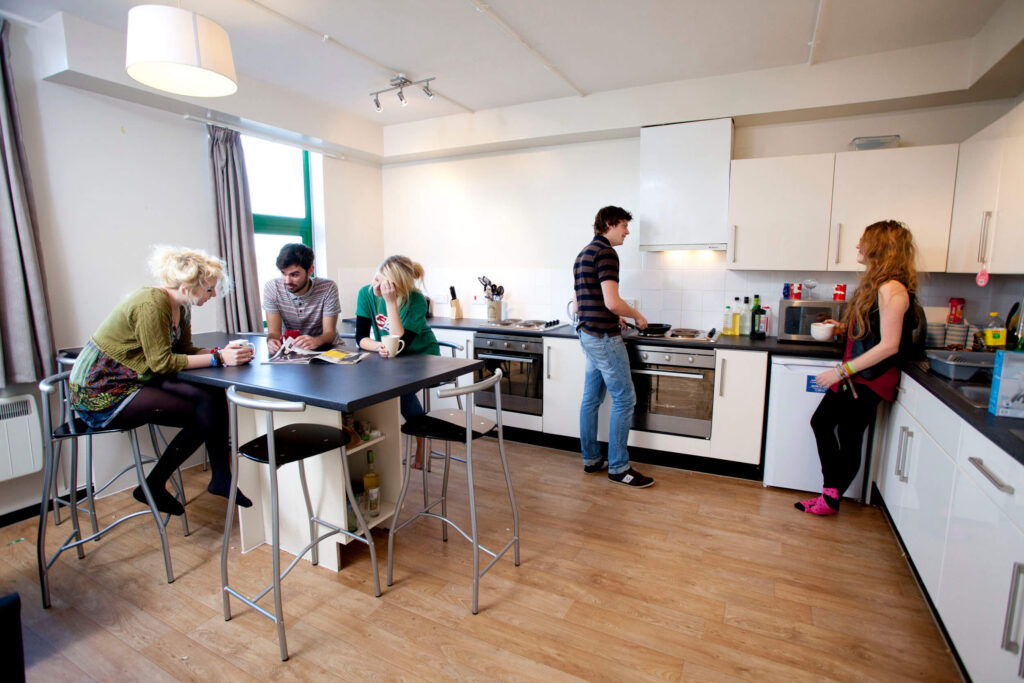
Many shared houses are located in student hotspots such as Fallowfield and Rusholme, giving easy access to university campuses and student nightlife.
Pros
- Lowest weekly rental costs
- Larger bedrooms and communal spaces
- Great social atmosphere
- Easy to share costs with friends
- Huge choice of properties
Cons
- Bills may not be included
- More responsibility for cleaning and maintenance
- Shared kitchens and bathrooms
- Can be noisy depending on housemates
Best for: Students who want to keep accommodation costs as low as possible while enjoying a sociable university experience.
Purpose-Built Student Accommodation (PBSA)
Purpose-built student accommodation has become one of the most popular choices in Manchester. These developments are designed specifically for students and typically include fully furnished rooms, study areas, gyms, social spaces, high-speed Wi-Fi and on-site management.

Although PBSA costs more than a traditional shared house, the all-inclusive nature of the rent makes budgeting much simpler.
Pros
- Bills usually included
- Modern facilities
- Secure buildings with on-site staff
- Excellent communal areas
- Fixed monthly costs
Cons
- Higher weekly rent
- Smaller rooms in some developments
- Less flexibility during tenancy
- Popular buildings book up quickly
Best for: Students looking for convenience, security and predictable monthly expenses.
University Halls
University-managed accommodation is often the first choice for students moving away from home for the first time. Living in halls provides an excellent opportunity to meet new people while staying close to campus and university support services.

Most university halls include utility bills, internet access and maintenance, making them an easy option for students unfamiliar with renting privately.
Pros
- Ideal for first-year students
- Bills generally included
- Close to campus
- Strong student community
- University support available
Cons
- Limited availability after first year
- Less choice over housemates
- Room sizes vary considerably
- Contracts usually follow the academic year
Best for: First-year students wanting a simple and supportive introduction to university life.
Student Studios
A studio apartment combines a private bedroom, bathroom and kitchen within one self-contained living space. Studios offer the highest level of independence and are particularly popular with postgraduate students, mature students and international students.

Although they command higher rental prices, many students appreciate the additional privacy and quieter environment.
Pros
- Complete privacy
- Private kitchen and bathroom
- Bills usually included
- Quiet study environment
- Modern facilities
Cons
- One of the most expensive options
- Less opportunity to socialise
- Smaller living space than shared houses
- High demand in popular developments
Best for: Students who prioritise privacy, independence and quiet surroundings.
Private Flats
Private one-bedroom apartments offer complete independence but are generally the least cost-effective option for most students. In addition to higher rent, tenants are often responsible for arranging utility bills, broadband and other household expenses separately.

While private flats provide flexibility and greater personal space, they rarely offer the student-focused facilities found in purpose-built accommodation.
Pros
- Complete independence
- Flexible property choice
- Ideal for couples or professionals
- More traditional rental experience
Cons
- Highest overall living costs
- Bills often paid separately
- No student facilities
- Greater responsibility for maintenance and administration
Best for: Postgraduate students, mature students, couples or those planning to stay in Manchester beyond university.
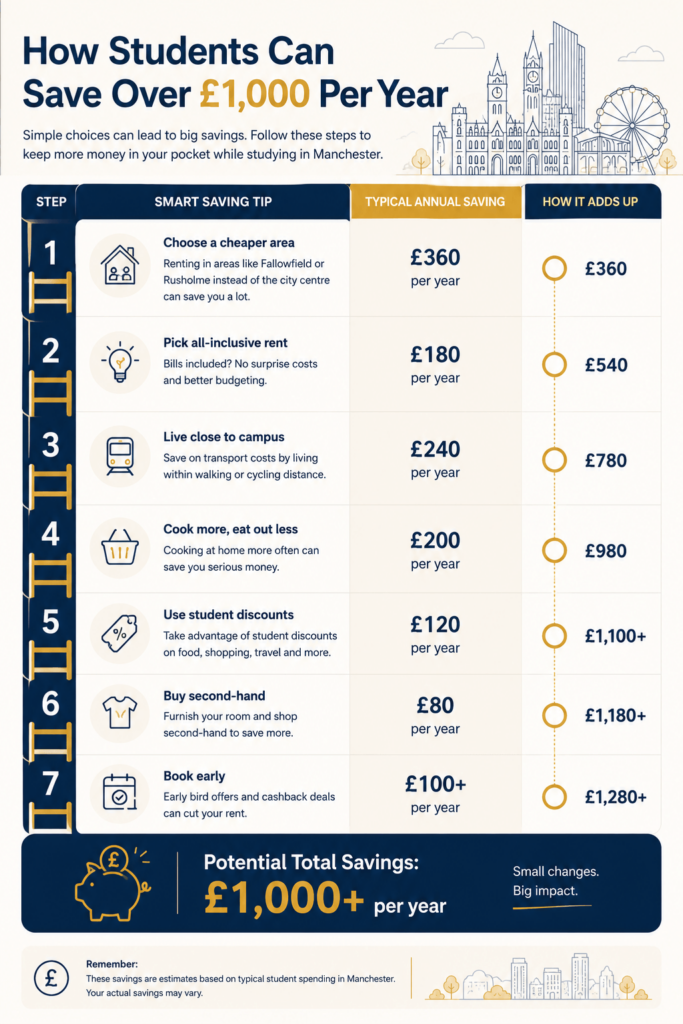
Which Accommodation Offers the Best Value?
For students on the tightest budgets, shared houses usually provide the lowest weekly rent and the best opportunity to save money. However, it’s important to remember that separate utility bills can significantly increase your overall living costs.
Purpose-built student accommodation often represents the best balance between price and convenience. While the weekly rent is higher, having utilities, Wi-Fi, contents insurance and on-site facilities included makes budgeting much simpler and removes the risk of unexpected expenses.
University halls remain an excellent choice for first-year students looking to settle into university life, while studios appeal to those who value privacy over cost. Private flats, although offering complete independence, are generally better suited to postgraduate students or couples due to their higher overall expense.
Ultimately, the best accommodation isn’t necessarily the cheapest; it’s the one that delivers the greatest value for your budget, lifestyle and university experience.
If you’re still deciding which option is right for you, our guide to Private Student Accommodation vs PBSA explains the key differences between private rentals and purpose-built accommodation. You can also learn more about Shared Student Accommodation, discover What is Purpose Built Student Accommodation? or compare the benefits of En-suite vs Studio Student Accommodation before making your decision.
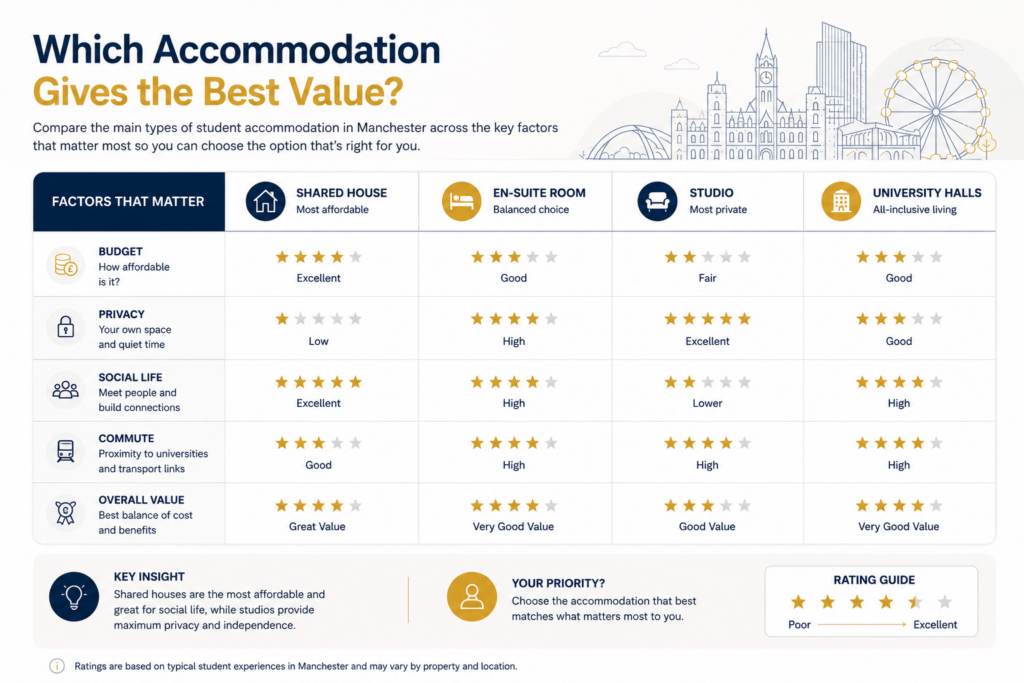
How to Save Money on Student Accommodation
Student accommodation is likely to be your biggest expense while studying in Manchester, but there are plenty of ways to reduce your overall costs without sacrificing comfort or convenience. While it’s tempting to focus solely on finding the lowest weekly rent, making smart decisions throughout the booking process can save hundreds, or even thousands, of pounds over the course of your tenancy.
From booking at the right time to comparing what’s actually included in your rent, these practical tips will help you get the best possible value from your student accommodation.
Book Early
One of the easiest ways to save money is to secure your accommodation as early as possible. Many purpose-built student accommodation providers release their rooms months before the academic year begins, often offering lower introductory prices, early booking discounts and a wider selection of room types.
Waiting until the summer can leave you with fewer options and higher prices, particularly in a popular student city like Manchester where demand is consistently high. Booking early also gives you more time to compare properties rather than rushing into the first available room.
Share with Friends
If you’re happy sharing a kitchen and living space, renting a shared house with friends is usually one of the most affordable accommodation options available.
Splitting the rent between four or five people can significantly reduce your weekly costs, and sharing everyday household items such as kitchen equipment, cleaning products and streaming subscriptions can also help lower your monthly spending.
Living with friends can make university life more enjoyable too, although it’s important to choose housemates carefully and agree expectations before signing a tenancy agreement.
Choose Accommodation with Bills Included
Accommodation with bills included often appears more expensive at first glance, but it can actually work out cheaper overall.
Properties that include electricity, gas, water, broadband and sometimes contents insurance provide predictable monthly costs and remove the risk of unexpected utility bills during colder months.
By contrast, a cheaper property with separate bills can quickly become more expensive once you factor in rising energy costs, internet contracts and administration fees.
Always compare the total cost of living, not just the weekly rent.
Compare Transport Costs
Location has a significant impact on your overall student budget. A room that’s £20 cheaper each week might seem like a bargain, but if you’re spending money on buses, trams or trains every day, those savings can quickly disappear.
Living within walking or cycling distance of your university can reduce transport expenses while also saving valuable time during the week. In many cases, paying slightly more for accommodation closer to campus results in lower overall living costs.
When comparing different properties, think about:
- Walking distance to lectures
- Public transport costs
- Cycling routes
- Access to supermarkets
- Travel time to part-time work
These factors all contribute to the true cost of your accommodation.
Watch Out for Hidden Fees
The advertised weekly rent doesn’t always tell the whole story. Before booking, check whether there are any additional charges that could increase your costs throughout the year.
Some properties may charge for:
- Administration fees
- Laundry facilities
- Parking permits
- Late payment charges
- Replacement key fees
- Optional contents insurance
- Cleaning costs at the end of your tenancy
Understanding these charges before you sign a contract can help you avoid unpleasant surprises later.
Consider Living Slightly Further Out
Manchester city centre generally commands the highest accommodation prices. Choosing a student area that’s slightly further from campus can often reduce your weekly rent considerably.
Neighbourhoods with excellent transport links or reasonable walking and cycling distances can provide a good balance between affordability and convenience. The key is finding an area where any savings on rent aren’t immediately cancelled out by higher commuting costs.
It’s worth comparing both rent and travel expenses before deciding where to live.
Look for Cashback and Special Offers
Many accommodation providers offer incentives throughout the booking season, particularly when new buildings open or when rooms remain available closer to the start of term.
These promotions may include:
- Cashback offers
- Free shopping vouchers
- Discounted deposits
- Free room upgrades
- Referral bonuses
- Flexible payment plans
While these offers shouldn’t be the only reason you choose a property, they can provide useful savings if you’re already considering a particular development.
Read Your Contract Carefully
Before signing any tenancy agreement, take the time to read every section carefully. Understanding your contract can prevent expensive mistakes later.
Pay particular attention to:
- Contract length
- Deposit requirements
- Cancellation policies
- Guarantor requirements
- Payment schedules
- What’s included in your rent
- Maintenance responsibilities
If anything is unclear, ask questions before committing. It’s much easier to clarify the terms before signing than to resolve disputes later.
Book Direct Where Possible
If you’ve found a property you like, it’s often worth checking whether you can book directly with the accommodation provider or property manager. In some cases, direct bookings provide access to exclusive promotions, cashback offers or more flexible booking terms that aren’t available through third-party listing websites.
Booking direct can also simplify communication if you need to ask questions about your tenancy or make changes before moving in.
Think About Value, Not Just Price
Saving money on student accommodation isn’t simply about choosing the room with the lowest weekly rent. The best value comes from balancing affordability with location, facilities, included bills and your day-to-day lifestyle.
A slightly more expensive room with bills included, modern facilities and a short walk to university may cost less overall than a cheaper property requiring daily transport and separate utility payments. Taking the time to compare every aspect of your accommodation, not just the advertised price, will help you make a smarter financial decision and enjoy a more comfortable university experience.
If you’re planning your accommodation budget, our Student Budgeting UK Cost Guide explains how to estimate your monthly living expenses. You should also read What’s Included in Student Accommodation? to understand exactly what your rent covers before you book.
Potential Annual Savings
Small decisions made when choosing your accommodation can make a surprisingly large difference over the course of an academic year. Looking beyond the advertised weekly rent and considering factors such as bills, transport costs and booking incentives could leave you with hundreds, or even thousands, of pounds extra by the end of your tenancy.
| Money-Saving Tip | Potential Annual Saving |
| Booking accommodation early | £100 – £500 |
| Choosing bills included accommodation | £300 – £800 |
| Walking instead of using public transport | £300 – £700 |
| Sharing a house with friends | £500 – £2,000 |
| Avoiding hidden tenancy fees | £50 – £300 |
| Booking directly with the accommodation provider | £50 – £300 |
| Taking advantage of cashback or promotional offers | £100 – £500 |
While not every student will benefit from every saving, combining several of these strategies can significantly reduce your overall cost of living throughout the academic year. Even choosing accommodation that’s slightly closer to campus or securing an early booking discount can have a noticeable impact on your budget.
Before committing to a tenancy, it’s also worth understanding the booking process and any financial commitments involved. Our guide explaining Why You Should Look for Student Accommodation Early explores the advantages of securing your room in advance, while our guide to Guarantor for Student Accommodation explains when a guarantor may be required and what your options are if you don’t have one.
Hidden Costs Students Forget About
When budgeting for student accommodation, it’s easy to focus solely on the weekly rent. However, many students underestimate the additional costs that can quickly add up over the course of an academic year. Some expenses only arise occasionally, while others become part of your regular monthly budget.
Understanding these hidden costs before you move in will help you budget more accurately and avoid financial surprises later in the year.
Tenancy Deposits
Most private student accommodation requires a tenancy deposit before you move in. This is usually refundable at the end of your contract, provided the property is left in good condition and there are no outstanding payments or damage.
Always check:
- How much the deposit is
- When it must be paid
- The conditions for receiving it back
- Whether it is protected under a recognised tenancy deposit scheme
Laundry Costs
If your accommodation doesn’t include free laundry facilities, washing clothes can become a regular expense. Many student accommodation providers charge separately for washing machines and tumble dryers, while shared houses may require tenants to contribute towards electricity and appliance maintenance.
Although each wash may only cost a few pounds, these charges can add up over the course of the year.
Parking
If you plan to bring a car to university, don’t assume parking is included with your accommodation. Many student developments either charge separately for parking spaces or don’t offer parking at all.
Before signing a tenancy agreement, check:
- Whether parking is available
- The annual permit cost
- Local parking restrictions
- Whether you’ll actually need a car
For many students living close to campus, relying on walking, cycling or public transport is often the more affordable option.
Printing and Study Costs
Although much university work is completed digitally, you’ll still need to budget for occasional printing, stationery and course materials. Depending on your degree, these costs can vary significantly throughout the academic year.
Small expenses like printer credit, notebooks and specialist materials often go unnoticed until they begin to accumulate.
Food and Groceries
Food is usually the second-largest monthly expense after accommodation. While Manchester offers plenty of affordable supermarkets and student discounts, eating out regularly or relying on takeaway meals can quickly increase your spending.
Planning meals, shopping with friends and cooking at home are some of the simplest ways to reduce your overall living costs.
Transport
Even if your accommodation appears cheaper, transport costs may offset the savings. Daily bus fares, tram tickets or fuel expenses can easily amount to hundreds of pounds each year.
When comparing accommodation, consider the total cost of living rather than focusing solely on rent. A property within walking distance of campus may prove better value overall than a cheaper room requiring daily travel.
TV Licence
If you plan to watch or record live television or use BBC iPlayer in your room, you may need a TV Licence. This is often overlooked by students, particularly those living independently.
Whether you need one depends on your living arrangements and how you watch television, so it’s worth checking the current requirements before moving in.
Contents Insurance
Many purpose-built student accommodation providers include basic contents insurance within the rent, but private rented houses often do not.
Replacing a laptop, phone or bicycle after theft or accidental damage can be extremely expensive, making contents insurance worthwhile for many students.
Always check whether insurance is already included before purchasing a separate policy.
Replacement Keys
Lost keys, access fobs and security cards can be surprisingly expensive to replace. Some accommodation providers charge administration fees in addition to the replacement cost, particularly for electronic entry systems.
Keeping a spare key with a trusted housemate or family member can help avoid unnecessary charges.
Cleaning Costs
At the end of your tenancy, you’ll normally be expected to return your accommodation in a clean condition. If you don’t, landlords or accommodation providers may deduct professional cleaning costs from your deposit.
Regular cleaning throughout the year not only creates a better living environment but can also help ensure you receive your full deposit back.
Estimated Hidden Costs
| Expense | Estimated Annual Cost |
| Laundry | £120 – £250 |
| Public transport | £250 – £700 |
| Food and groceries | £1,800 – £3,000 |
| Printing and study materials | £50 – £200 |
| TV Licence (if required) | Around £175 |
| Contents insurance (if not included) | Contents insurance (if not included) |
| Contents insurance (if not included) | £150 – £600 |
| Replacement keys or access fobs | £20 – £100 |
| End-of-tenancy cleaning | £50 – £200 |
| Tenancy deposit (refundable) | Typically 3 – 5 weeks’ rent |
While not every student will incur all of these costs, they’re important to consider when planning your budget. Looking beyond the advertised rent gives you a much clearer picture of what living in Manchester will actually cost and helps prevent unexpected financial pressure during the academic year.
For a full breakdown of accommodation costs, food, travel, utilities and everyday student spending, read our comprehensive Student Budgeting UK Cost Guide. It provides practical budgeting advice to help you manage your finances throughout your time at university.
Monthly Student Budget in Manchester
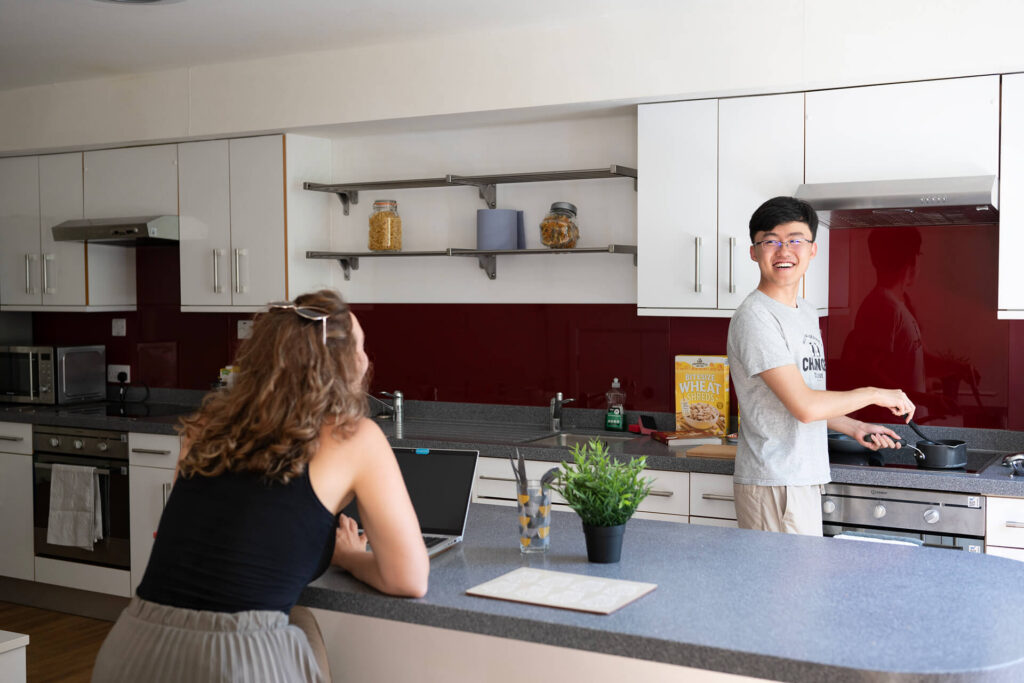
Accommodation is usually the biggest expense you’ll face as a student, but it’s only one part of your monthly budget. Food, transport, your mobile phone, social activities and everyday spending can all add up quickly if you’re not careful. Creating a realistic monthly budget before you move to Manchester will help you manage your finances more effectively and reduce the risk of running short of money during the academic year.
The exact amount you’ll spend depends on your lifestyle and the type of accommodation you choose. Students living in shared houses often benefit from lower rent but may need to budget separately for utility bills, while those living in purpose-built student accommodation usually have predictable monthly costs thanks to all-inclusive rent.
The example below provides a realistic guide to the typical monthly costs many students can expect when living in Manchester.
| Expense | Typical Monthly Cost |
| Rent | £550 – £900 |
| Food & Groceries | £180 – £280 |
| Transport | £20 – £80 |
| Social Activities | £100 – £250 |
| Mobile Phone | £10 – £30 |
| Gym Membership | £20 – £45 |
| Miscellaneous (clothing, toiletries, subscriptions, study costs) | £75 – £175 |
While rent is your largest expense, food and social spending are often the easiest areas to control. Meal planning, cooking at home, taking advantage of student discounts and walking or cycling instead of using public transport can make a noticeable difference to your monthly budget.
It’s also sensible to leave some room for unexpected costs. Replacement course materials, medical expenses, birthdays, society memberships and occasional travel home can all arise throughout the academic year. Having a small financial buffer each month can help prevent these expenses from becoming stressful.
Example Student Budgets
Every student’s lifestyle is different, but the examples below provide a useful guide to three typical spending levels.
| Budget Type | Estimated Monthly Budget | Who It’s Best For |
| Budget Student | £900 – £1,100 | Students sharing accommodation, cooking most meals and keeping social spending low. |
| Average Student | £1,150 – £1,400 | Students living in en-suite accommodation with a balanced lifestyle and regular social activities. |
| Comfortable Budget | £1,500 – £1,900+ | Students living in studios or premium accommodation with higher discretionary spending. |
Remember that these figures are intended as general budgeting examples. Your own costs will depend on where you live, the accommodation you choose and your personal spending habits.
The most effective way to stay within your budget is to understand your monthly income and plan your essential expenses before spending on non-essential items. Choosing accommodation with bills included, living within walking distance of your university and taking advantage of student discounts can all help keep your finances under control.
With a realistic budget in place, you’ll spend less time worrying about money and more time enjoying everything Manchester has to offer throughout your university experience.

When Should You Book Student Accommodation in Manchester?
One of the biggest factors affecting both price and availability is when you book your student accommodation. Manchester is home to one of the UK’s largest student populations, meaning the best rooms in the most popular developments are often reserved months before the academic year begins.
Booking early not only gives you a wider choice of accommodation but can also help you secure lower prices, take advantage of early booking incentives and avoid the stress of searching during the busy summer months. Leaving your search until the last minute often means paying more while having fewer properties and room types to choose from.
Here’s how the accommodation market typically changes throughout the year.

September
As the new academic year begins, accommodation providers start preparing for the following intake. Although most students have already moved in, many providers begin releasing rooms for the next academic year during September.
This is an excellent time to start researching different accommodation options, comparing locations and understanding typical prices.
Availability: ★★★★★
Competition: ★☆☆☆☆
October
October is one of the best months to begin your accommodation search. Most developments have released their rooms, giving you access to the widest selection of room types, buildings and locations.
If you already know you’ll be returning to Manchester the following academic year, this is an ideal time to start comparing options without feeling pressured.
Availability: ★★★★★
Competition: ★★☆☆☆
November
By November, many students have already started booking for the following year, particularly larger friendship groups looking for shared houses.
Early booking promotions, cashback offers and discounted room rates are still widely available, making this one of the best times to secure good value accommodation.
Availability: ★★★★★
Competition: ★★☆☆☆
January
January is often considered the peak booking period. Students return after the Christmas break and begin organising accommodation for the next academic year, causing demand to increase significantly.
Although there’s still an excellent choice available, premium rooms, studios and the most popular student developments begin selling out quickly.
Availability: ★★★★☆
Competition: ★★★★☆
March
By March, many of Manchester’s most sought-after properties have already been reserved. There’s still a good selection available, but students may need to compromise on room type, building or location if they’ve delayed booking.
If you’re still searching at this stage, it’s sensible to make a decision sooner rather than later.
Availability: ★★★☆☆
Competition: ★★★★★
May
By May, accommodation choices become increasingly limited. Premium studios, larger shared houses and the best-value developments are often fully booked, leaving fewer options available.
Students booking during this period may need to consider different areas or slightly higher budgets.
Availability: ★★☆☆☆
Competition: ★★★★★
Summer (June – August)
Summer is generally the most difficult time to secure student accommodation in Manchester. While cancellations occasionally create opportunities, availability is limited and prices are often higher than earlier in the booking cycle.
Waiting until the summer also increases the risk of needing to compromise on location, facilities or budget simply because the best rooms have already been reserved.
International students and those receiving late university offers may still find accommodation during this period, but flexibility becomes increasingly important.
Availability: ★☆☆☆☆
Competition: ★★★★★
Best Time to Book
For most students, the ideal booking window falls between October and January. During these months you’ll benefit from:
- The widest choice of accommodation.
- Greater availability of popular room types.
- Access to early booking discounts and promotions.
- More time to compare different properties.
- Less pressure when making your decision.
Students looking for shared houses should ideally begin organising their group during the autumn term, as the most popular student houses are often reserved well before spring.
Worst Time to Book
The most challenging period to find accommodation is typically June through to August. By this stage, many of the highest-rated student developments have already sold out, leaving fewer options and reducing your ability to compare prices and locations.
Booking earlier doesn’t necessarily mean you’ll pay less, but it does give you far greater choice and a much better chance of finding accommodation that offers excellent value for money.
For a more detailed explanation of the student accommodation booking cycle, including practical advice on when to start searching and what to expect throughout the year, read our guide on When Should You Book Student Accommodation?. It explains the booking process in more detail while helping you decide the right time to secure your room before demand increases.

StudentFM Accommodation in Manchester
Finding the right student accommodation isn’t just about securing the lowest rent, it’s about choosing somewhere you’ll feel comfortable, supported and able to make the most of your university experience. At StudentFM, we focus on helping students find high-quality accommodation that delivers excellent value, combining modern living with practical features that make day-to-day student life easier.
Whether you’re moving to Manchester for your first year, looking for accommodation with friends or searching for a quieter place to live during your postgraduate studies, StudentFM offers accommodation designed around the needs of today’s students. From straightforward booking processes to friendly support, our aim is to help you feel at home from the moment you move in.
Many of our accommodation options include utility bills within the rent, helping you budget with confidence and avoid unexpected monthly costs. With high-speed Wi-Fi, fully furnished rooms and modern communal spaces available in many developments, you’ll have everything you need to study, relax and enjoy student life.
StudentFM also believes that accommodation should be about more than just having somewhere to sleep. Living alongside other students helps create a welcoming community where it’s easy to meet new people, build friendships and settle into life in Manchester. Whether you’re looking for a sociable shared environment or a quieter place to focus on your studies, there are room types available to suit different budgets and lifestyles.
Featured Property: Q3 Apartments
One of our most popular Manchester properties is Q3 Apartments, offering modern student accommodation in a convenient location with easy access to the city’s universities, shops and transport links.
Key highlights include:
- Modern, fully furnished student rooms
- Bills included for simpler budgeting
- High-speed Wi-Fi
- Comfortable communal spaces
- Secure accommodation with student-focused facilities
- Convenient location for Manchester universities
- A range of room options to suit different budgets
Whether you’re looking for your first student room or upgrading your accommodation for the next academic year, Q3 Apartments provides a comfortable and convenient base from which to enjoy everything Manchester has to offer.
Ready to find your next student home? Browse our full range of Student Accommodation Manchester properties, explore everything that Q3 Apartments Manchester has to offer, or use our Property Search to compare available accommodation and find the option that’s right for you.
Frequently Asked Questions
Shared student houses are generally the most affordable option, with rooms typically starting from around £110 per week. They’re particularly popular with second and third-year students who are happy to share kitchens and living spaces to reduce costs.
Compared with cities such as London, Manchester offers relatively good value for students. Accommodation is generally more affordable, and there are plenty of student discounts, reasonably priced supermarkets and public transport options to help keep living costs manageable.
This depends on the accommodation. Many purpose-built student accommodation (PBSA) developments include utility bills, Wi-Fi, contents insurance and access to communal facilities, while some shared houses require tenants to arrange and pay for these separately. Always check exactly what’s included before signing your tenancy agreement.
For students who value privacy and independence, a studio can be an excellent investment. Although studios cost more than shared accommodation, they provide your own kitchen, bathroom and living space, making them particularly popular with postgraduate and international students.
Most university halls and purpose-built student accommodation include gas, electricity, water, Wi-Fi and sometimes contents insurance within the rent. Shared houses vary, so it’s important to confirm exactly what’s included before booking.
Fallowfield and Rusholme are generally regarded as two of Manchester’s most affordable and popular student areas, offering a wide range of shared houses alongside good transport links and a lively student community.
Most students should budget between £900 and £1,400 per month, depending on their accommodation, lifestyle and spending habits. Rent will usually be your biggest monthly expense, followed by food, transport and social activities.
Yes. Manchester welcomes thousands of international students each year, and most student accommodation providers actively cater for overseas applicants. Some providers may request additional identification or alternative payment arrangements if you don’t have a UK guarantor.
Many private landlords and accommodation providers ask students to provide a UK-based guarantor. If you don’t have one, some providers accept rent payments upfront or work with professional guarantor services.
The best time to start looking is between October and January for the following academic year. Booking early usually provides the widest choice of accommodation and access to early booking offers.
It depends on the room type and location. University halls often provide excellent value for first-year students, while private halls may offer more modern facilities, larger communal areas and additional amenities. Comparing what’s included is often more important than comparing rent alone.
An en-suite room gives you a private bedroom and bathroom while sharing a kitchen with other students. A studio is completely self-contained, providing your own bedroom, bathroom and kitchen within one private living space.
Some accommodation providers offer early booking discounts, cashback promotions, referral rewards or seasonal offers. Student discounts are also widely available on everyday spending, helping reduce your overall cost of living.
In many cases, yes. Renting a shared house with friends usually results in lower weekly rent and allows utility bills to be divided between several tenants, making it one of the most affordable accommodation options.
Accommodation in Victoria Park, Hulme, Ardwick and Manchester city centre generally provides convenient access to the University of Manchester. Several purpose-built student accommodation developments are also located within walking distance of campus.
Yes. Although most student tenancies run for the academic year, some accommodation providers offer shorter contracts, semester-only lets or flexible tenancy lengths, particularly for postgraduate and international students.
Most private student accommodation requires a refundable tenancy deposit before you move in. The amount varies depending on the accommodation provider and tenancy agreement, so always confirm the payment terms before booking.
Generally, yes. Fallowfield typically offers lower weekly rents than accommodation in Manchester city centre, particularly for shared houses. However, when comparing costs, remember to factor in transport expenses and commuting time as well.
Weekly rents vary depending on the accommodation type. Shared houses generally cost £110 – £170 per week, en-suite rooms around £170 – £240, while studios typically range from £220 – £330 per week.
Start by deciding on your budget, preferred location and the type of accommodation that best suits your lifestyle. Compare what’s included in the rent, check transport links, read reviews and understand the tenancy agreement before making your decision. Choosing accommodation that offers the best overall value, not simply the lowest rent, will help you enjoy a more comfortable and affordable university experience.
Conclusion
Manchester offers student accommodation to suit almost every budget, whether you’re looking for an affordable room in a shared house, an all-inclusive en-suite in purpose-built student accommodation or the privacy of your own studio. With such a wide variety of options available, finding somewhere that matches both your finances and your lifestyle is entirely achievable with a little planning.
While it’s natural to focus on securing the lowest weekly rent, the cheapest accommodation isn’t always the best value. Utility bills, transport costs, contract lengths, location and on-site facilities can all have a significant impact on your overall cost of living. In many cases, paying slightly more for accommodation that’s closer to campus or includes your bills can save both money and time throughout the academic year.
The key is to compare accommodation based on the complete package rather than price alone. Thinking about your daily commute, budgeting for hidden costs, choosing the right room type and booking early can all help you make a more informed decision. Taking the time to understand your priorities now can lead to a more enjoyable, affordable and stress-free university experience in Manchester.
If you’re ready to find your ideal student home, browse our range of Student Accommodation Manchester properties, use our Property Search to compare available accommodation, or Book a Room and take the next step towards securing your student accommodation in Manchester.