
Preston has built a reputation as one of the UK’s most affordable university cities, making it an attractive choice for students who want to enjoy university life without the high living costs associated with larger cities. While your overall spending will depend on your lifestyle and accommodation choice, most students find Preston offers an excellent balance between affordability, convenience and a vibrant student experience.

In this guide, we’ll break down everything you need to know about the cost of living in Preston for students in 2026, including:
One of the biggest factors affecting your monthly budget is where you live. Choosing the right Student Accommodation Preston can significantly reduce your overall living costs, particularly when bills and high-speed internet are included in your rent. Before planning your finances, it’s also worth reading our Student Budgeting UK Cost Guide for practical budgeting tips that apply wherever you study.
Compared with cities like Manchester, Birmingham and Leeds, Preston remains one of the UK’s most affordable university cities, making it a popular choice for students looking to keep living costs under control without sacrificing student life.

How Much Does it Cost to Live in Preston as a Student?
The average cost of living in Preston as a student is usually around £700–£1,100+ per month, depending on where you live, your room type and how you manage day-to-day spending. Accommodation is normally the biggest monthly cost, but food, transport, bills, phone contracts, going out and study costs all need to be planned for too.
| Expense | Monthly |
| Accommodation | £400 – £700 |
| Food | £120 – £220 |
| Transport | £20 – £60 |
| Utilities | £0 – £80 |
| Phone | £10 – 25 |
| Going Out | £80 – 150 |
| Study Costs | £20 – 50 |
These figures are only a guide, as every student’s budget will look slightly different. A student living in bills-inclusive accommodation may spend less on separate utilities, while someone in a private rental may need to budget extra for gas, electricity, water and broadband.
Your monthly costs will also depend on how often you cook at home, how much you spend on nights out, whether you need to travel home regularly, and how much you spend on clothes, subscriptions or shopping. Students who walk to campus, shop at budget supermarkets and plan meals in advance can usually keep costs lower.
For a wider look at managing student money, see our Student Budgeting UK Cost Guide. You can also read What’s Included in Student Accommodation? to understand which bills and facilities may already be covered in your rent.
Student Accommodation Costs in Preston
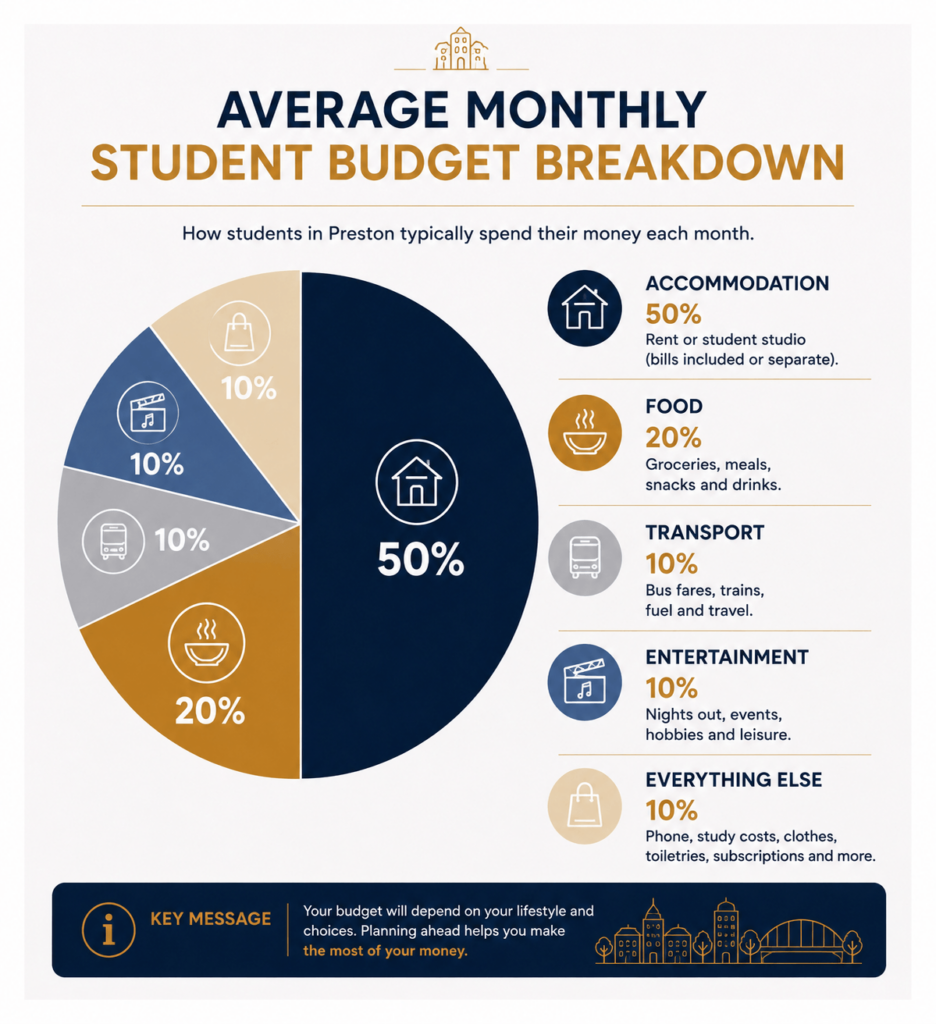
For most students, accommodation is by far the biggest monthly expense and will usually account for around 50% of your overall budget. The amount you pay depends on the type of property you choose, whether bills are included, and how close you want to be to the University of Central Lancashire (UCLan) and Preston city centre.
Students looking for the lowest rents often choose shared houses, where several tenants split the cost of the property and household bills. This remains one of the most affordable options, particularly for second and third-year students. If you’re comparing this type of housing, our guide to Shared Student Accommodation explains the main benefits and considerations.
Many first-year and international students prefer purpose-built student accommodation (PBSA) because it combines convenience with an all-inclusive living experience. To understand how these buildings differ from traditional rentals, read What is Purpose Built Student Accommodation? or compare the pros and cons in our guide to Private Student Accommodation vs PBSA.
Students who value privacy often choose studio apartments, which provide a self-contained living space with a private kitchen and bathroom. Although studios generally cost more than shared accommodation, many students feel the extra independence and quieter study environment justify the higher weekly rent.
Traditional university halls remain another popular option for first-year students, offering an easy introduction to university life and opportunities to meet new people. Meanwhile, private rentals can provide greater flexibility for groups of friends wanting to live together, although these often require tenants to arrange and pay for utilities separately.
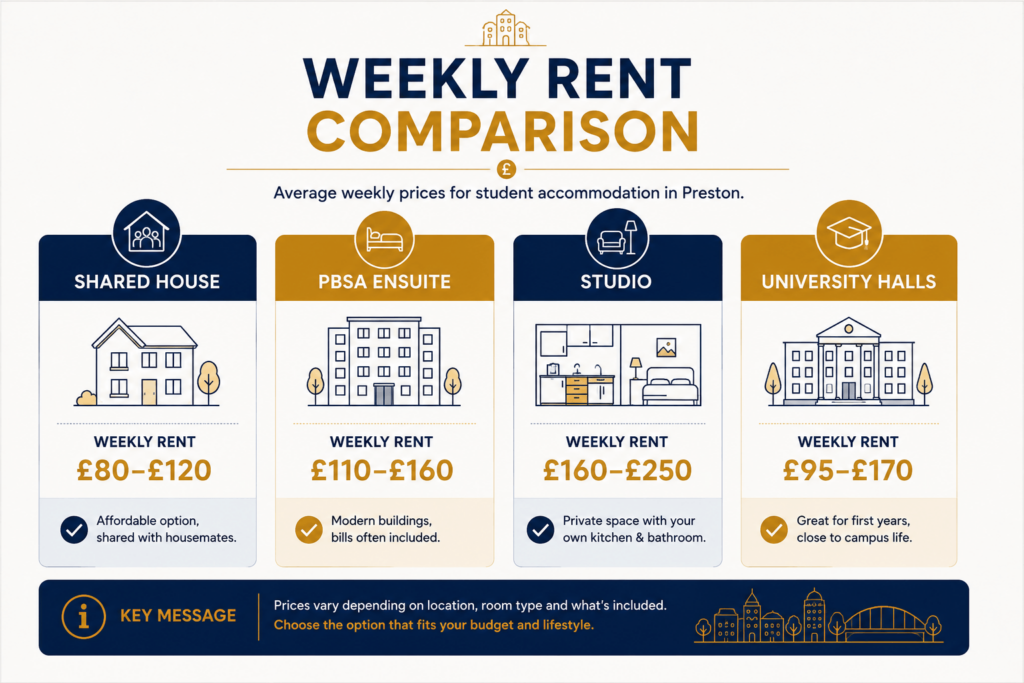
Typical weekly accommodation costs in Preston are:
| Accommodation Type | Typical Weekly Rent |
| Shared House | £80 – £120 |
| University Halls | £95 – £170 |
| PBSA Ensuite | £110 – £160 |
| Studio Apartment | £160 – £250+ |
Many modern student developments include much more than just a room. Depending on the property, your rent may also cover:
- Utility bills (gas, electricity and water)
- High-speed Wi-Fi
- Contents insurance
- On-site gym
- Communal study spaces
- Social lounges and games areas
- Laundry facilities
- CCTV, secure entry systems and on-site management
Choosing accommodation with bills included can make budgeting much easier, as you’ll know exactly what you’ll pay each month without worrying about fluctuating energy costs.
If you’re looking for value, browse our selection of Cheap Student Accommodation Preston or compare all available options on our Student Accommodation Preston page. For a complete overview of room types, locations and booking advice, see our Student Accommodation Preston Guide.
One of Preston’s most popular purpose-built developments is The Tramshed, offering modern studios and ensuite rooms with bills included, excellent communal facilities and a convenient location close to UCLan. For many students, accommodation represents around half of their monthly spending, so choosing the right room can have the biggest impact on both your budget and your university experience.
Food & Grocery Costs
Food is one of the easiest areas of your student budget to control. Most students in Preston spend between £25 and £45 per week on groceries, although this can rise to £60 or more if you regularly buy branded products, eat out frequently or rely on takeaways.
Preston has a good choice of supermarkets, meaning it’s easy to shop around and keep food costs down. Aldi and Lidl are generally the cheapest options for everyday essentials, while Tesco, Morrisons and Asda offer a wider range of products, regular promotions and student-friendly meal deals. Many students also take advantage of loyalty schemes, digital coupons and reduced-price evening items to stretch their budgets further.
Cooking your own meals is almost always cheaper than ordering takeaways several times a week. Preparing lunches and evening meals in advance can save hundreds of pounds over the course of an academic year while also helping you eat more healthily. If you’re looking for simple recipes, take a look at Healthy Meal Planning: Easy Recipes for Busy Students and How to Meal Plan for Newbies.
Meal deals are another popular way to save money, particularly if you’re on campus all day. Many supermarkets offer lunch bundles, while cafes and restaurants around Preston often provide student discounts during term time.
Students can reduce food costs even further by using discount apps such as Too Good To Go, which allows you to buy surplus food from local supermarkets, bakeries and restaurants at heavily reduced prices. Combined with supermarket loyalty schemes and student discount platforms, these small savings can quickly add up throughout the year.
If you’re planning your overall university finances, our Student Budgeting UK Cost Guide includes more tips on managing everyday spending, reducing food costs and making your student loan go further.

Transport Costs
One of Preston’s biggest advantages for students is that it is a highly walkable city. Unlike larger student cities where daily transport costs can quickly add up, many students studying at UCLan can comfortably walk between their accommodation, campus, shops, cafés and nightlife in less than 20 minutes.
If you choose accommodation close to the university, you may rarely need to pay for public transport at all, making Preston one of the more affordable places to study in the UK.
Typical Student Transport Costs
| Transport | Typical Cost |
| Walking | Free |
| Cycling | Low ongoing cost |
| Local Bus Journey | £2 – £3 |
| Weekly Bus Travel | £15 – £22 |
| 16–25 Railcard | Around £35 per year |
| Typical Monthly Transport Budget | £20 – £60 |
Walking Around Preston
Walking is the preferred way for many students to travel around the city.
From accommodation in the city centre or around Corporation Street, Moor Lane and the UCLan campus, you’ll usually be within walking distance of:
- University buildings
- Libraries
- Supermarkets
- Student bars and cafés
- Restaurants and takeaways
- Gyms
- Preston Railway Station
This is one reason why many students searching for Student Accommodation Preston choose centrally located properties that reduce both travel time and monthly expenses.
Cycling
Preston is relatively flat compared with many UK cities, making cycling a practical option for students who want an inexpensive way to travel.
Cycling can reduce travel costs to almost zero after purchasing a bike, and many purpose-built student accommodation buildings provide secure bicycle storage.
Bus Travel
Although many students rarely need buses during term time, Preston’s local bus network is useful for retail parks, part-time jobs, visiting friends, exploring surrounding areas, and travelling outside the city centre.
Single fares are generally inexpensive, and regular travellers can save money with weekly or monthly bus tickets.
Rail Travel
For students travelling home during holidays or visiting other cities, a 16–25 Railcard is often worthwhile. It provides up to one-third off most rail fares throughout the UK and typically pays for itself after just a few journeys.
Preston Railway Station also offers excellent connections to Manchester, Liverpool, Lancaster, Blackpool, Birmingham and London.
Why Many UCLan Students Don’t Need a Bus
One of the biggest benefits of studying at UCLan is that the university campus is integrated into the city centre rather than being located on the outskirts.
Students living in nearby accommodation often walk to lectures in just a few minutes, with supermarkets, cafés, libraries, gyms and nightlife all within easy reach. As a result, many students spend little or nothing on transport during a typical week, helping keep their overall cost of living lower than in many larger university cities.
For a closer look at accommodation within walking distance of campus, read Why Students Choose UCLan Student Accommodation in Preston.
Entertainment & Social Life Budget
One of the biggest advantages of studying in Preston is that enjoying student life doesn’t have to cost a fortune. Compared with many larger university cities, Preston offers affordable nights out, cafés, gyms and entertainment, making it easier to balance your social life with your monthly budget.
Typical Student Entertainment Costs
| Activity | Typical Cost |
| Coffee | £3 – £5 |
| Meal deal | £3.50 – £5 |
| Casual restaurant meal | £10 – £20 |
| Takeaway | £8 -£15 |
| Cinema ticket | £7 – £12 |
| Student gym membership | £15 – £35 per month |
| Student Union events | Free – £15 |
| Night out | £20 – £50+ |
Nights Out
Preston has a lively student nightlife centred around the UCLan campus and city centre. Whether you prefer pubs, bars, clubs or live music venues, it’s possible to enjoy a night out on a student budget.
Many venues also run student nights, discounted drinks and special offers throughout the week, helping keep costs lower than many larger UK cities.
Coffee & Cafés
Coffee shops are popular places for studying, meeting friends or taking a break between lectures. Independent cafés and well-known chains offer plenty of choice, with most drinks costing between £3 and £5.
Many cafés also provide student discounts when you show a valid student ID.
Cinema & Leisure
A cinema trip is an affordable evening out, with student tickets often available for under £10. Preston also offers bowling, escape rooms, mini golf and other entertainment options that regularly provide student discounts.
Gym & Sports
Many students choose either a university sports membership or a local commercial gym, with memberships typically costing £15 – £35 per month. UCLan also has a wide range of sports clubs and societies, making it easy to stay active while meeting new people.
Eating Out
Preston has everything from independent cafés and street food to popular restaurant chains. Eating out occasionally is affordable, but regularly cooking at home can save hundreds of pounds over the course of an academic year.
Student Union Events
The UCLan Students’ Union organises regular social events throughout the year, including freshers’ activities, society nights, quizzes, live entertainment and seasonal celebrations. Many events are either free or heavily discounted, making them an excellent way to socialise without overspending.
Overall, setting aside around £80 – £150 per month for entertainment is enough for many students to enjoy Preston’s social scene while still maintaining a sensible budget.
Related reading:
Monthly Student Budget Examples
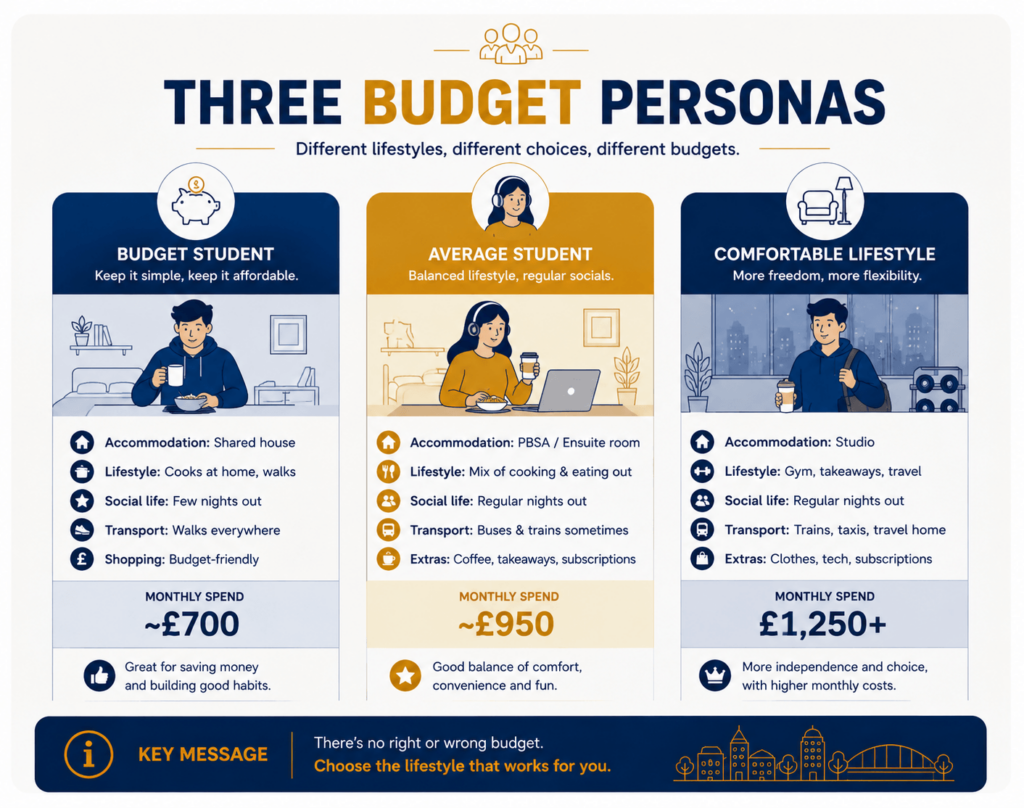
Student budgets in Preston can vary a lot depending on where you live, how often you cook, how much you go out and whether you choose a shared room, ensuite or studio. The examples below show three realistic monthly budgets for different student lifestyles.
| Student Type | Accommodation | Lifestyle | Typical Monthly Spend |
| Budget Student | Shared house | Cooks at home, walks, limited nights out | Around £700 |
| Average Student | PBSA / ensuite room | Mix of cooking, eating out and regular socials | Around £950 |
| Comfortable Lifestyle | Studio | Gym, takeaways, more travel and social spending | £1,250+ |
Budget Student: Around £700 Per Month
A budget-conscious student in Preston will usually keep costs low by choosing shared accommodation, cooking most meals at home and walking to lectures instead of paying for transport.
This type of budget might include:
- Shared house or lower-cost room
- Home-cooked meals
- Aldi or Lidl food shops
- Walking instead of buses or taxis
- Fewer nights out
- Careful use of student discounts
This is often the most affordable way to live in Preston, especially if you are happy sharing facilities and keeping social spending under control. You can read more about this type of setup in our guide to Shared Student Accommodation.
Average Student: Around £950 Per Month
An average student budget usually allows for a bit more flexibility. This might include living in purpose-built student accommodation, having bills included, going out regularly and occasionally eating out or ordering food.
This type of budget might include:
- PBSA or ensuite accommodation
- Bills and internet included
- A mix of cooking and eating out
- Regular coffee, takeaways or casual meals
- Social nights out
- Some travel home or around the city
For many students, this offers a good balance between comfort, convenience and affordability. If you are comparing room types, our Ensuite vs Studio Student Accommodation guide can help you decide what suits your budget best.
Comfortable Lifestyle: £1,250+ Per Month
Students with a higher monthly budget may choose a private studio, spend more on food, use the gym regularly, take taxis occasionally and travel home more often.
This type of budget might include:
- Studio accommodation
- Private kitchen and bathroom
- Gym membership
- More takeaways and eating out
- Regular nights out
- Train travel or taxis
- More spending on clothes, subscriptions and personal items
This option gives you more independence and privacy, but it also increases your monthly costs. Accommodation choice is usually the biggest factor, so it is worth comparing room types carefully before booking.
For wider money planning, see our Student Budgeting UK Cost Guide.
Hidden Costs Students Forget
When planning your student budget, it’s easy to focus on rent and groceries while overlooking the smaller expenses that gradually add up throughout the academic year. These hidden costs can amount to several hundred pounds if you’re not prepared, so it’s worth factoring them into your monthly budget from the start.
Laundry
If your accommodation doesn’t include free laundry facilities, washing clothes can cost between £4 – £8 per week depending on how often you wash and dry your clothes. Many PBSA buildings use app-operated laundry rooms, while shared houses may have their own washing machines.
Course Materials
Although many university resources are now digital, some courses still require:
- Textbooks
- Printing
- Stationery
- Specialist software
- Art or laboratory materials
Depending on your course, these costs can range from £50 – £300 per academic year.
Clubs and Societies
Joining student societies is one of the best ways to meet new people, but membership fees can vary.
Typical costs include:
- Society memberships
- Sports club subscriptions
- Team kits
- Social events
- Trips and competitions
Budgeting £50 – £200 per year is sensible if you plan to get involved.
Streaming Services & Subscriptions
Monthly subscriptions are easy to overlook because they leave your account automatically.
These might include:
- Netflix
- Spotify
- Amazon Prime Student
- Apple Music
- Cloud storage
- Gaming subscriptions
Individually they seem inexpensive, but together they can easily exceed £30 – £50 per month.
Travelling Home
Many students travel home during weekends, holidays or special occasions.
Remember to budget for:
- Train tickets
- Coach travel
- Fuel
- Airport transfers
- Luggage costs
Buying tickets early and using a Railcard can significantly reduce these expenses.
Healthcare
Most healthcare is covered through the NHS, but students may still need to budget for:
- Prescriptions (where applicable)
- Dental appointments
- Eye tests
- Glasses or contact lenses
- Over-the-counter medication
Having a small emergency fund for unexpected healthcare costs is always worthwhile.
Kitchen Equipment
Moving into your first student home often means buying essentials such as:
- Pots and pans
- Plates and cutlery
- Knives
- Chopping boards
- Food storage containers
- Cleaning products
- Small appliances
These one-off purchases can easily total £75 – £200, depending on what your accommodation provides. Before buying everything yourself, check our guide to What’s Included in Student Accommodation? to avoid purchasing items that may already be supplied.
Deposits & Upfront Costs
Your first payment is often much larger than students expect.
You may need to budget for:
- Holding deposits
- Booking fees (where applicable)
- Advance rent payments
- Security deposits
- Guarantor arrangements
Understanding these costs before booking can prevent unexpected surprises. Our guide to Guarantor Student Accommodation explains how guarantors work and when you may need one.
Contents Insurance
While some purpose-built student accommodation includes basic contents insurance, many private rentals do not.
If your belongings aren’t covered, a student contents insurance policy can help protect:
- Laptops
- Phones
- Bikes
- Clothing
- Valuables
Always check exactly what’s included before purchasing additional cover.
Graduation Costs
Graduation feels a long way off when you start university, but it comes with its own expenses.
Typical costs may include:
- Graduation gown hire
- Professional photographs
- Family travel
- Celebration meals
- Accommodation for visitors
Planning ahead means these final-year costs won’t come as an unwelcome surprise.
Plan for the Unexpected
The most successful student budgets aren’t just about covering rent, they also leave room for unexpected expenses throughout the year. Setting aside even £20 – £50 per month into an emergency fund can make a significant difference when hidden costs arise.
Before moving in, it’s also worth reading our Moving Into Student Accommodation Checklist to make sure you’ve budgeted for everything you’ll need during your first few weeks.

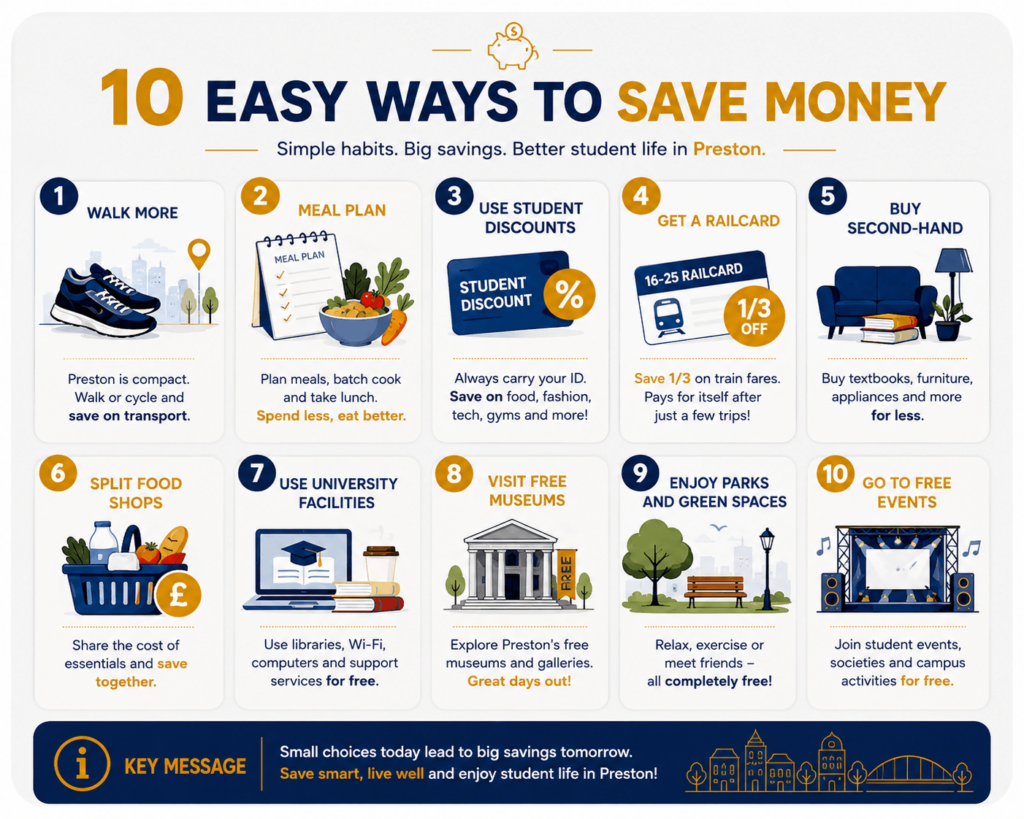
Ways to Save Money in Preston
Living in Preston is already more affordable than many UK university cities, but there are still plenty of ways to stretch your budget even further. Small changes to your daily routine can save hundreds of pounds over the course of an academic year without affecting your university experience.
Walk Instead of Using Public Transport
One of Preston’s biggest advantages is its compact city centre. Most UCLan students can walk between their accommodation, lectures, supermarkets, cafés and nightlife in just a few minutes.
Choosing accommodation close to campus means you can often avoid paying for buses altogether, saving hundreds of pounds each year.
Plan Your Meals
Meal planning is one of the easiest ways to reduce weekly spending.
Simple habits include:
- Planning meals before shopping
- Buying only what you need
- Batch cooking meals
- Freezing leftovers
- Taking lunch to campus instead of buying food every day
Even saving £5–£10 per week quickly adds up over the academic year. Our guide to How to Meal Plan for Newbies includes practical tips to help you get started.
Make the Most of Student Discounts
Always carry your student ID and take advantage of student discount schemes.
Popular savings include:
- UNiDAYS
- Student Beans
- TOTUM
- Restaurant discounts
- Clothing retailers
- Technology stores
- Gym memberships
Many businesses in Preston also offer exclusive student deals throughout the year.
Buy a Railcard
If you regularly travel home or visit other cities, a 16 – 25 Railcard can reduce most train fares by one-third.
For many students, the cost of the Railcard is recovered after just a few journeys, making it one of the best-value purchases for anyone travelling by train.
Buy Second-Hand
There’s no need to buy everything brand new.
Students can save money by purchasing:
- Textbooks
- Furniture
- Kitchen equipment
- Small appliances
- Bikes
- Course materials
Many students also sell unwanted items at the end of each academic year, making it easy to pick up quality items for a fraction of their original price.
Split Your Food Shopping
Sharing groceries with housemates can significantly reduce costs.
Buying larger packs of essentials such as:
- Rice
- Pasta
- Milk
- Cleaning products
- Cooking oil
- Frozen food
often works out much cheaper than buying individual portions.
Use University Facilities
Your tuition fees already provide access to a wide range of university services.
Take advantage of:
- Library study spaces
- Computer suites
- Wi-Fi
- Student support services
- Careers advice
- Society events
- Campus study rooms
Using these facilities instead of paying for alternatives can help reduce your monthly spending.
Visit Preston’s Free Museums
Not every day out needs to cost money.
Preston has several free attractions where students can spend an afternoon without affecting their budget, including museums, galleries and historic buildings throughout the city centre.
Enjoy Preston’s Parks and Green Spaces
Preston is home to several attractive parks that are completely free to visit.
Popular options include:
- Avenham Park
- Miller Park
- Moor Park
- Winckley Square Gardens
These are perfect for walking, exercising, meeting friends or simply relaxing between lectures.
Take Advantage of Free Student Events
Throughout the academic year, UCLan and the Students’ Union organise a wide range of free events.
These often include:
- Welcome Week activities
- Careers fairs
- Sports taster sessions
- Live entertainment
- Guest speakers
- Wellbeing events
- Society showcases
They’re a great way to socialise without spending money.
Start Saving Before You Even Arrive
One of the biggest ways to reduce your overall university costs is to secure accommodation early. Booking sooner often gives you a wider choice of rooms and prices, helping you find accommodation that suits both your lifestyle and your budget.
You can also find more practical money-saving advice in our Student Budgeting UK Cost Guide and learn why booking early can make a difference in Why You Should Look for Student Accommodation Early.
Is Preston Affordable Compared with Other Student Cities?
When choosing where to study, tuition fees are often the same wherever you go, but your day-to-day living costs can vary significantly depending on the city.
Preston consistently ranks as one of the UK’s most affordable university cities thanks to its relatively low accommodation costs, compact city centre and excellent walkability. Compared with larger cities such as Manchester or Birmingham, students in Preston often spend considerably less on rent and transport while still enjoying everything they need within easy reach.
Typical Monthly Student Budget Comparison
| City | Typical Monthly Budget |
| Preston | £750 – 1,100 |
| Leeds | £850 – 1,250 |
| Manchester | £950 – 1,400 |
| Birmingham | £900 – 1,350 |
| Liverpool | £850 – 1,250 |
These figures represent typical monthly living costs, including accommodation, groceries, transport, utilities, entertainment and general day-to-day spending. Individual budgets will vary depending on accommodation type and lifestyle.
Why Preston Offers Better Value
Several factors help keep Preston’s cost of living lower than many other popular university destinations:
- Lower average student accommodation rents
- A compact city centre where most students walk instead of paying for transport
- Affordable supermarkets and independent food outlets
- Lower entertainment and nightlife costs than larger cities
- Good rail connections without the premium city-centre living costs found elsewhere
Accommodation is usually the biggest monthly expense for students, so choosing a city with lower rental prices can save thousands of pounds over the course of a degree. Whether you choose a shared house, ensuite room or private studio, Preston generally offers better value than many comparable university cities.
For comparison, you may also find these guides useful: Cost of Living Leeds Students, Cost of Living Leicester Students, Student Accommodation Leeds Guide, Student Accommodation Leicester and Student Accommodation in Nottingham.

What Students Say About Living Costs in Preston
Student reviews of Preston tend to highlight one clear theme: it is a practical, affordable city for university life. While it may not have the scale or polish of larger cities, many students feel the lower cost of living makes it easier to manage rent, food, transport and social spending.
A recurring point from student feedback is that Preston is cheaper than many larger UK cities. Students often describe it as good value for money, especially because accommodation, supermarkets, takeaways and nights out are generally more affordable than in places like Manchester, Leeds or Birmingham.
Accommodation is one of the biggest reasons Preston is seen as budget-friendly. Many students feel they can find decent-value rooms close to campus, especially when comparing options through a Student Accommodation Preston Guide before booking.
The compact city centre also helps keep costs down. Because UCLan, shops, cafés, bars, restaurants and student accommodation are often within walking distance, many students rarely need to rely on buses or taxis during a normal week. This can make a noticeable difference to monthly spending, especially for students trying to stick to a tighter budget.
Food and social life are also mentioned positively. Cheap supermarkets, affordable takeaways, student-friendly bars and lower-cost nightlife help students enjoy themselves without spending as much as they might in bigger cities. For students moving from abroad or adjusting to UK university life, Preston’s smaller size can also make day-to-day budgeting feel easier to manage, especially when paired with practical support for International Students.
That said, student feedback is not entirely one-sided. Some students mention that accommodation prices have increased in recent years, while others feel food and transport can still become expensive if you are not careful with your weekly spending. A few reviews also describe Preston as less glamorous than larger cities, but many students still feel the affordability, walkability and convenience outweigh this.
Overall, the student view is balanced but positive: Preston may not be the biggest or most exciting university city in the UK, but it offers strong value for money. For students who want a manageable budget, easy access to campus and a city where most essentials are close by, Preston remains a sensible choice. It is also worth checking practical information around Safety & Wellbeing before choosing where to live.

Frequently Asked Questions
Compared with many other UK university cities, Preston is considered one of the most affordable places to study. While the cost of living has increased across the UK in recent years, Preston generally remains cheaper than cities such as Manchester, Birmingham and Leeds, particularly when it comes to accommodation.
For most students, rent is the largest monthly expense. Fortunately, Preston offers a wide range of accommodation options, including shared houses, ensuite rooms and private studios at prices that are often lower than those found in larger cities. If you book early and compare your options carefully, you can usually secure excellent value accommodation close to the University of Central Lancashire (UCLan). Browse the latest options in our Student Accommodation Preston guide.
Everyday costs also tend to be manageable. Many students walk rather than paying for transport, supermarkets are competitively priced, and there are plenty of affordable cafés, takeaways and student bars throughout the city. Budget-conscious students can reduce costs even further by cooking at home, sharing food shops with housemates and making use of student discounts.
Overall, Preston offers an excellent balance between affordability and convenience, making it a popular choice for students looking to keep their living costs under control.
The amount you need depends on your accommodation type and lifestyle, but most students in Preston should budget between £750 and £1,100 per month.
Typically, your monthly spending includes:
Accommodation
Food and groceries
Utilities (if not included)
Transport
Phone and internet
Course materials
Social activities
Personal spending
Students living in shared accommodation generally spend less than those renting private studios. Choosing accommodation with bills included also makes monthly budgeting much easier because you won’t need to worry about fluctuating utility costs.
If you’re moving to Preston for the first time, it’s sensible to set aside extra money for deposits, kitchen equipment and course materials during your first month. International students may also need additional funds for travel or visa-related expenses, so it’s worth reading our guide for International Students before arriving.
Planning your budget in advance allows you to enjoy university life without worrying about unexpected expenses.
Yes. In almost every comparison, Preston is cheaper than Manchester for students.
Accommodation is where the biggest savings are made. Average rents in Preston are significantly lower, allowing students to enjoy modern accommodation without paying the premium prices often found in Manchester city centre. You can compare available rooms in our Student Accommodation Preston guide.
Day-to-day living costs are also generally lower. Eating out, nightlife, parking and many local services tend to cost less, while Preston’s compact layout means many students don’t need to budget much for transport.
Manchester naturally offers more entertainment, shopping and career opportunities, but these advantages often come with higher living costs. Many students find Preston provides a better balance between affordability and quality of life, particularly if staying within a monthly budget is a priority.
If keeping living costs low is important, Preston consistently offers better overall value.
Absolutely. In fact, most students in Preston do not own a car.
The city centre is compact, with UCLan, supermarkets, cafés, libraries, gyms and nightlife all located within easy walking distance of most student accommodation. Many students rarely need to use public transport during the week.
When travelling further afield, Preston has regular local bus services and excellent rail connections to Manchester, Liverpool, Lancaster, Blackpool and London. Students who travel frequently can often save money by purchasing a Railcard.
Owning a car usually adds unnecessary costs through insurance, fuel, maintenance and parking. Unless you regularly travel home or commute outside Preston, most students find walking, cycling and public transport perfectly adequate.
Choosing accommodation close to campus can reduce both travel costs and commuting time throughout your degree.
The cheapest accommodation usually consists of shared student houses or older ensuite developments, although prices vary depending on location, room type and booking date.
Students who book early generally have the widest choice and the best prices. Waiting until the summer often means fewer rooms remain available, particularly close to campus.
If you’re specifically looking for lower-cost options, our guide to Cheap Student Accommodation Preston explains how to compare prices, understand what’s included and find the best value rooms.
It’s also worth remembering that the cheapest weekly rent isn’t always the cheapest overall. Accommodation with utilities, Wi-Fi and contents insurance included can often work out cheaper than paying separate household bills throughout the year.
Always compare the total monthly cost rather than focusing solely on the advertised weekly rent.
Food costs vary depending on your shopping habits, but most students spend between £30 and £60 per week on groceries.
Shopping at supermarkets such as Aldi, Lidl, Tesco and Asda can keep costs low, particularly if you meal plan and cook with housemates. Splitting food shops, buying supermarket own-brand products and preparing lunches at home can reduce your monthly spending considerably.
Eating out is generally more affordable than in many larger cities, with Preston offering plenty of student-friendly cafés, takeaways and restaurant deals throughout the week.
Students who regularly cook at home often save hundreds of pounds across the academic year compared with those who rely on takeaway food.
Developing good budgeting habits early can make a noticeable difference to your overall university living costs.
Yes. Preston is widely regarded as one of the UK’s easiest university cities for students to budget in.
Lower accommodation costs, affordable supermarkets, walkable streets and competitive entertainment prices all contribute to lower monthly spending. Because many essentials are located close together, students often spend less on transport than they would in larger cities.
Accommodation with bills included also provides predictable monthly expenses, making it easier to manage your finances throughout the academic year. Students who combine affordable accommodation with meal planning, student discounts and sensible spending habits often find they can live comfortably without overspending.
Whether you’re studying for one year or a full degree, Preston remains an excellent option for students looking to maximise value while keeping costs under control.
In most purpose-built student accommodation (PBSA), bills are usually included within your weekly rent. This commonly covers electricity, heating, water, Wi-Fi and sometimes contents insurance.
However, not every property includes the same services, particularly if you’re renting a shared student house through a private landlord. Before signing your tenancy agreement, always check exactly what is included to avoid unexpected monthly costs.
Our guide to What’s Included in Student Accommodation? explains everything you should expect before booking.
Some accommodation providers may also require a guarantor before confirming your booking. If you’re unsure how this works, our Guarantor Student Accommodation guide explains the process and the alternatives available.
Choosing accommodation with bills included makes budgeting far simpler and helps many students avoid unexpected expenses during the academic year.
Find Student Accommodation in Preston That Fits Your Budget
Choosing the right accommodation is one of the biggest factors affecting your monthly student budget. A lower weekly rent, bills included, and a location within walking distance of UCLan can save you hundreds, if not thousands, of pounds over the course of your degree.
Whether you’re looking for an affordable ensuite room, a private studio or modern shared accommodation, comparing your options early gives you the best chance of securing great value before the most popular rooms are booked.
At StudentFM, you can explore verified student accommodation in Preston, compare bills-inclusive options and find properties in convenient locations close to campus. From budget-friendly rooms to premium living spaces, there’s accommodation to suit every lifestyle and budget.
Ready to find your ideal student home?