
The cost of living in Leeds for students usually ranges from around £750 to £1,600+ per month, depending on where you live, the type of accommodation you choose and how much you spend on food, transport and social life.
For most students, accommodation will be the highest monthly cost. A room in a shared student house will usually be more affordable than a studio or modern purpose-built student accommodation, while areas such as Burley, Woodhouse and Hyde Park often offer better value than Leeds City Centre.

Leeds is generally considered one of the more affordable major UK student cities, especially compared with London, Bristol or Edinburgh. Students can often keep costs lower by choosing accommodation within walking distance of campus, sharing with others, cooking at home and checking whether bills are included before booking.
That said, there is no single “average” student budget. A student living in a shared house in Burley or Woodhouse will usually spend much less than someone renting a private studio in the city centre. Your total monthly cost will depend on your accommodation type, whether bills are included, your lifestyle and how often you use buses, taxis, takeaways or nights out.
If you are still comparing where to live, you can browse our Student Accommodation in Leeds, explore Cheap Student Accommodation in Leeds, or read our full Leeds Student Accommodation Guide for more advice before booking.
Quick Answer: How Much Does It Cost to Live in Leeds as a Student?
Your monthly student budget in Leeds will depend heavily on your accommodation type, location and lifestyle. Students living in shared housing and cooking at home will usually spend far less than students renting private studios or living in premium PBSA buildings with added amenities.
| Student Lifestyle | Estimated Monthly Budget |
| Budget student | £750 – £950 |
| Typical student | £950 – £1,250 |
| PBSA / studio student | £1,250 – £1,600+ |
| International student with higher upfront costs | £1,100 – £1,600+ |
These estimates usually include accommodation, bills, groceries, transport, social spending and general day-to-day expenses, but your actual costs may vary depending on where you live and how you manage your budget.
Students living in shared accommodation in areas such as Woodhouse, Burley or Hyde Park will often spend less overall than students choosing city-centre studios or luxury private student accommodation. Bills-inclusive accommodation can also make budgeting easier by reducing unexpected monthly costs during winter or peak energy periods.
Looking for predictable monthly costs? Explore student accommodation in Leeds.
Why Leeds Is a Good Value Student City
Leeds has become one of the UK’s most popular student cities thanks to its balance of affordability, university reputation and student lifestyle. With a large student population spread across multiple universities, the city has developed a strong student-focused culture with accommodation, nightlife, transport and social spaces all designed around university life.
The city is home to several well-known institutions, including the University of Leeds, Leeds Beckett University, Leeds Trinity University and Leeds Arts University. Together, they attract tens of thousands of UK and international students every year, helping create a diverse and energetic student atmosphere throughout the city.
Compared with London and many southern UK cities, Leeds is generally far more affordable for students. Accommodation costs are usually lower, transport is cheaper and many students find they can comfortably walk between university campuses, student areas and the city centre without relying heavily on buses or taxis.
One of the biggest advantages of Leeds is how walkable the city can be. Popular student areas such as Woodhouse, Hyde Park and Burley are all located close to university campuses, making it easier for students to reduce transport costs while staying close to lectures, libraries, cafes and nightlife.
Leeds is also known for having one of the UK’s best student nightlife scenes. From the famous Otley Run and Headingley pubs to live music venues, bars, clubs and independent coffee shops, there is always something happening throughout the academic year. This combination of affordability and social life is one of the reasons Leeds consistently remains a top student destination.
The city also benefits from strong transport connections. Leeds railway station provides direct routes to Manchester, Sheffield, York, Newcastle and London, while local bus services make it easy to travel between student neighbourhoods and university campuses. For many students, Leeds offers the ideal balance between big-city energy and manageable living costs.
If you are moving to Leeds from overseas, visit our International Students page for more advice about studying and living in the UK. Parents supporting students moving away for university can also explore our Parents and Guardians guide, or compare neighbourhoods in our Best Student Areas in Leeds guide.

Leeds Student Cost Breakdown
The cost of living in Leeds can vary significantly depending on your accommodation type, location and lifestyle choices. Students living in shared accommodation with bills included will usually spend much less than students renting private studios or regularly eating out and using taxis.
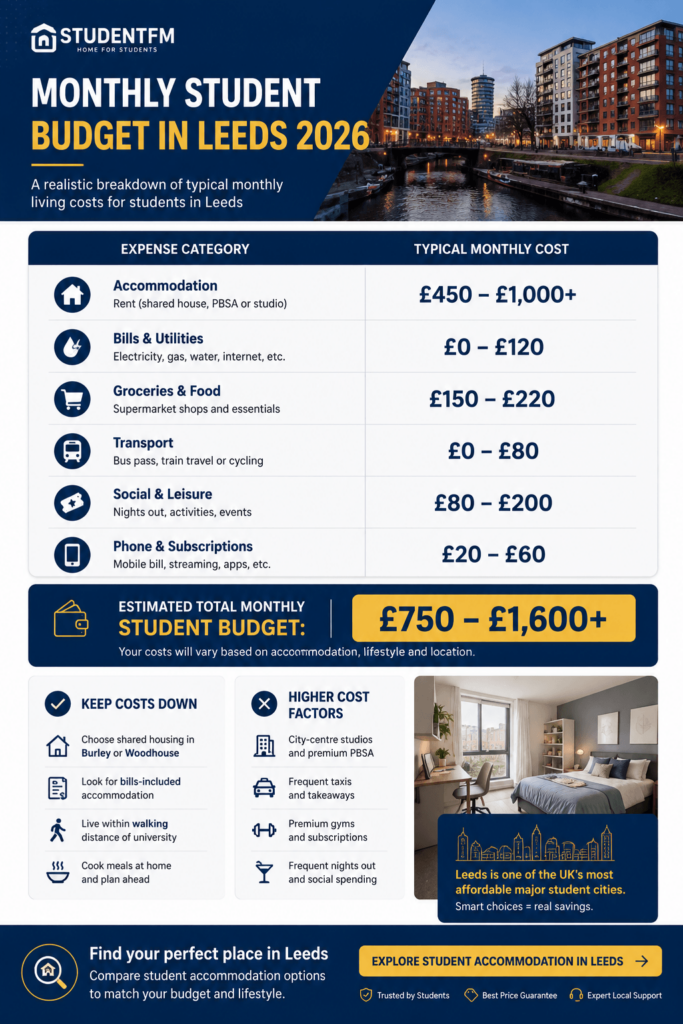
The table below shows a realistic monthly student budget range for Leeds in 2026.
| Expense | Budget Range Per Month |
| Rent / accommodation | £450 – £1,000+ |
| Bills | £0 – £120 |
| Groceries | £120 – £200 |
| Transport | £0 – £80 |
| Social life | £80 – £200 |
| Phone / subscriptions | £20 – £60 |
| Course costs | £10 – £50 |
| Total | £750 – £1,600+ |
For many students, rent will account for over half of their total monthly spending. Shared student houses in areas such as Woodhouse, Burley and Hyde Park are usually more affordable than city-centre studios or luxury PBSA buildings.
Bills can also vary considerably depending on whether your accommodation includes utilities. Many modern student accommodation providers include electricity, heating, water and Wi-Fi within the rent, helping students avoid unpredictable monthly costs during winter.
Groceries and transport are generally cheaper in Leeds compared with London and many southern UK cities, especially if you live within walking distance of university campuses. Social spending can vary massively depending on nightlife, gym memberships, takeaways and how often students go out during the week.
If you want help planning your finances before moving, read our full Student Budgeting UK Cost Guide or learn more about What’s Included in Student Accommodation UK before booking your accommodation.

Accommodation Costs in Leeds
Accommodation is usually the single biggest expense for students living in Leeds, and the type of property you choose will have the biggest impact on your overall monthly budget. Leeds offers a wide range of student accommodation options, from traditional shared student houses and university halls to modern PBSA buildings and private studios.
For many students, shared housing remains the cheapest option. Areas such as Hyde Park, Burley, Woodhouse and Headingley are popular because students can split rent and bills between multiple housemates, keeping monthly costs lower. Shared houses also tend to offer larger living spaces compared with many modern studio apartments.
University halls are often the most popular choice for first-year students because they are simple to manage and usually include utility bills and Wi-Fi within the rent. Living in halls can also make it easier to meet other students during your first year at university.
Private student accommodation and PBSA (Purpose Built Student Accommodation) have become increasingly popular in Leeds, especially among international students and those looking for a more modern living experience. These buildings often include study areas, gyms, social spaces, on-site security and maintenance support, helping create a more convenient and community-focused student lifestyle.
Studios are usually the most expensive accommodation type because students pay for private kitchens and bathrooms rather than sharing communal facilities. While studios provide more privacy and independence, they can significantly increase monthly living costs compared with ensuite rooms or shared apartments.
One of the most important things students should check before booking is whether the rent is all-inclusive. Bills-included accommodation usually covers electricity, heating, water and internet within the monthly rent, making budgeting far easier throughout the academic year. Bills-excluded accommodation may initially appear cheaper, but additional utility costs can quickly add £50 – £120+ per month depending on energy usage and household size.
This is why headline rent is not always the true cost of accommodation. A room advertised at a lower weekly price may actually work out more expensive once heating, Wi-Fi, contents insurance, laundry and other living expenses are added separately. Many students now prefer all-inclusive accommodation because it offers predictable monthly costs and removes the stress of managing household bills with flatmates.
If you are comparing accommodation types, read our guides on What Is Purpose Built Student Accommodation?, Private Student Accommodation vs PBSA, Ensuite vs Studio Student Accommodation and All Inclusive Student Accommodation before making a decision.

Cost of Student Accommodation by Area in Leeds
Where you choose to live in Leeds can have a major impact on both your monthly budget and your overall university experience. Some areas are better suited to students looking for lower rent and walking distance to campus, while others are more popular for nightlife, larger shared houses or modern PBSA developments.
The table below gives a general overview of the most popular student areas in Leeds and what they are typically known for.
| Area | Typical Cost Level | Best For |
| Burley | Lower | Budget students |
| Woodhouse | Lower to mid | Walking to campus |
| Hyde Park | Mid | Social student life |
| Headingley | Mid | Bigger shared houses |
| City Centre | Higher | PBSA and studios |
| Meanwood | Mid | Quieter living |
Burley is often one of the best-value student areas in Leeds, especially for students looking to reduce accommodation costs while still staying close to university campuses. The area offers a mix of shared student houses and affordable rentals with good transport connections into the city centre.
Woodhouse is one of the most convenient locations for students studying at the University of Leeds and Leeds Beckett University. Many students choose Woodhouse because it allows them to walk to lectures, libraries and the city centre without relying heavily on buses or taxis. It also offers a balance between affordability and convenience.
Hyde Park is one of the most well-known student areas in Leeds and is particularly popular with students looking for a lively social atmosphere. The area is packed with cafes, takeaways, bars and student houses, making it one of the busiest student neighbourhoods during term time.
Headingley remains a classic Leeds student location thanks to its larger shared houses, strong nightlife scene and access to pubs, restaurants and the famous Otley Run route. Many second and third-year students move to Headingley after their first year in halls or PBSA accommodation.
Leeds City Centre tends to be the most expensive option because it is home to many newer PBSA buildings, luxury student developments and private studios. However, city-centre living can appeal to students who want modern amenities, shorter commutes and easy access to shopping, nightlife and transport links.
Meanwood is generally quieter and slightly more residential than Hyde Park or Headingley, making it popular with postgraduates or students looking for a calmer living environment while still remaining close to campus.
If you want a more detailed breakdown of neighbourhoods, read our full Best Student Areas in Leeds guide. Students specifically considering Woodhouse can also explore our Woodhouse area page or view Woodhouse Flats for accommodation close to both university campuses and Leeds city centre.

Bills Included vs Bills Excluded
When comparing student accommodation in Leeds, it is important to check whether bills are included in the rent or charged separately. A room with a cheaper headline price can sometimes work out more expensive once electricity, heating, water, Wi-Fi and other household costs are added on top.
Bills-included accommodation usually means that key utilities are bundled into one fixed rent payment. This often includes electricity, heating, water and Wi-Fi, and some providers may also include contents insurance. Laundry may be included in some buildings, but many student properties still charge separately for washing and drying through card or app-operated machines.
The main benefit of bills-included rent is predictable budgeting. Students know what they need to pay each month, which makes it easier to manage maintenance loans, part-time income and day-to-day spending. This is one of the reasons many students prefer all-inclusive student accommodation, especially if they are moving away from home for the first time.
Bills-excluded accommodation can sometimes be cheaper, particularly in larger shared houses where costs are split between several housemates. If everyone is careful with heating, electricity and water usage, the overall monthly cost may be lower than paying a fixed all-inclusive rent.
However, bills-excluded properties can also carry more risk. Winter heating costs can rise quickly, especially in older student houses with poor insulation or inefficient boilers. Students may also need to organise utility accounts, chase housemates for payments and deal with changing energy prices throughout the year.
Before booking, students should check exactly what is included in the rent, whether there are any usage caps, how laundry is charged, and whether contents insurance is provided. Our guide to what’s included in student accommodation in the UK explains this in more detail.
It is also worth checking safety and management standards before signing anything. Secure entry, reliable maintenance, working heating and clear contract terms can make a big difference to student life, so students should also read how to know if your student accommodation is safe and secure before choosing where to live.

Food and Grocery Costs in Leeds
Food is one of the easiest areas for students to control their monthly spending in Leeds. Most students typically spend between £120 and £200 per month on groceries, depending on how often they cook at home, order takeaways or eat out socially.
Leeds has a wide mix of supermarkets across student areas, including Aldi, Lidl, Tesco, Morrisons and Sainsbury’s. Budget supermarkets such as Aldi and Lidl are particularly popular with students looking to reduce weekly grocery costs, while Tesco Express and Sainsbury’s Local stores are convenient for quick top-up shops closer to accommodation and university campuses.
Meal deals are also a major part of student life in Leeds. Many students regularly use supermarket meal deals for lunch between lectures, usually costing around £3 – £5 depending on the retailer. While convenient, relying on meal deals and takeaways every day can quickly increase monthly living costs.
Takeaways and eating out are another area where spending can vary significantly. Leeds has a strong student food scene with affordable takeaways, street food and student-friendly restaurants across Hyde Park, Headingley and the city centre. However, regular takeaway spending can add up quickly, especially when delivery fees are included.
Many students save money by batch cooking meals at the start of the week and preparing packed lunches for university. Cooking larger meals such as pasta, chilli, curry or stir fry portions can dramatically reduce food costs while also saving time during busy study periods.
Students moving away from home for the first time often underestimate how much food spending affects their overall budget. Learning simple budgeting and meal planning habits early can make a noticeable difference across the academic year.
For practical student-friendly ideas, read our guides on Healthy Meal Planning: Easy Recipes for Busy Students and How to Meal Plan for Newbies.

Transport Costs in Leeds
Transport costs in Leeds can vary a lot depending on where a student lives. One of the biggest advantages of choosing the right accommodation area is reducing the need for daily travel costs altogether.
Students living in Woodhouse or Hyde Park are often able to walk to the University of Leeds or Leeds Beckett University campuses. This can save hundreds of pounds across the academic year compared with students living further out of the city.
Areas such as Headingley, Burley and Meanwood are still popular with students but usually require regular bus travel. Leeds has strong bus connections into the city centre and university areas, with many students using discounted student bus passes to reduce travel costs. Depending on usage, transport spending in Leeds is usually between £0 and £80 per month.
Cycling is another popular option, especially for students trying to reduce living costs further. Leeds continues to improve cycling routes across major student areas, and many accommodation buildings now include secure bike storage facilities.
Students living near Burley Park train station may also use trains for commuting or travelling around Yorkshire. Rail travel can become more affordable with student railcards, especially for those regularly visiting home or travelling on weekends.
Taxis and Ubers are another hidden cost many students underestimate. While Leeds city centre is relatively compact, late-night journeys after nights out can quickly add up over time, particularly during busy weekends or peak periods.
This is why location plays a major role in the true cost of student living. A cheaper property further from campus may end up costing more overall once transport costs are included. Students should compare rent prices alongside travel expenses before choosing where to live.
To compare the most popular student neighbourhoods, read our guide to Best Student Areas in Leeds. Students can also explore available options across the city in our main Student Accommodation in Leeds guide.

Social Life and Nightlife Costs
Leeds is well known for its student nightlife, social scene and large university population, which makes entertainment spending an important part of most student budgets. While Leeds is usually cheaper than cities like London, regular nights out and daily social spending can still add up quickly over the academic year.
One of the city’s most famous student traditions is the Otley Run, a pub crawl route stretching through Headingley and Hyde Park towards the city centre. Students living in these areas often spend less on transport because many bars and pubs are within walking distance.
Leeds has a huge mix of pubs, bars, clubs and live music venues, ranging from budget student nights to more expensive city-centre venues. A typical student night out can vary massively depending on drink prices, taxis and entry fees, with many students spending anywhere from £20 to £80 per week socially.
Coffee shops are another regular expense that many students underestimate. Leeds has a strong café culture, especially around Hyde Park, Headingley and the city centre, where daily coffees, snacks and study sessions can quietly increase monthly spending.
Eating out is also a major social expense. From takeaway food after nights out to brunches, casual restaurants and delivery apps, food spending outside the weekly grocery shop often becomes one of the biggest hidden lifestyle costs for students.
Gym memberships and university sports societies can also affect budgets. Many students use university gyms because they are cheaper than private fitness clubs, while societies often include membership fees, trips, social events and sports costs throughout the year.
One of the biggest financial challenges for students is the accumulation of “small spends”, coffees, snacks, meal deals, subscriptions, Ubers, takeaway food and social drinks. Individually, these costs may seem small, but together they can significantly increase monthly living costs if not managed carefully.
For many students, the social side of university is one of the most valuable parts of the experience, so budgeting realistically for entertainment and socialising is important rather than trying to avoid it completely.
Students moving to Leeds for the first time can also read Making New Friends Starting Your Academic Year With Confidence and How to Find New Friends in Your Student Accommodation for advice on settling into student life and building friendships.
Realistic Monthly Student Budgets in Leeds
Every student in Leeds spends differently depending on accommodation type, social habits, transport use and lifestyle choices. Some students prioritise lower rent and cooking at home, while others prefer modern accommodation with more convenience and included amenities.
Budget Student (£750 – £950 Per Month)
A budget-focused student will usually live in shared accommodation in areas such as Burley or Woodhouse, where rents are lower and university campuses are often within walking distance.
This type of student typically:
- lives in a shared house or flat
- splits bills with housemates
- walks to university regularly
- cooks most meals at home
- limits taxis and takeaway spending
- uses student discounts where possible
Students following this type of budget often choose older shared housing because it provides some of the lowest overall living costs in Leeds.
Explore more options in our guide to Cheap Student Accommodation in Leeds.
Typical Student (£950 – £1,250 Per Month)
A more typical Leeds student budget usually includes a balance between social spending and affordability. Many students in Hyde Park or Headingley fall into this category.
This type of student may:
- live in a shared student house
- spend more on nights out, coffee shops and takeaways
- occasionally use buses, taxis or Ubers
- mix cooking at home with eating out
- have gym memberships or society costs
- travel home during term time
This is often considered the most realistic student lifestyle range for Leeds because it includes both essentials and regular social spending.
Students comparing housing options can also read our guide to Shared Student Accommodation.
PBSA / Studio Student (£1,250 – £1,600+ Per Month)
Students choosing PBSA developments or private studios usually spend more overall but benefit from convenience, privacy and predictable bills.
This type of student often:
- lives in a modern city-centre building
- chooses ensuite rooms or studios
- has all-inclusive rent with bills included
- spends less time managing utilities or shared-house issues
- uses more delivery services, taxis and convenience spending
- prioritises location, amenities and private space
While headline rent is higher, bills are often easier to manage because utilities, Wi-Fi and sometimes contents insurance are included within the monthly payment.
Students comparing room types can read Ensuite vs Studio Student Accommodation to understand the differences between shared and private living options.

Hidden Costs Students Forget
When students calculate the cost of living in Leeds, they often focus mainly on rent and groceries. However, many smaller or one-off expenses can quickly increase the real cost of student life if they are not planned for properly.
One of the biggest upfront costs is the tenancy deposit. Most student accommodation requires a deposit before moving in, and some students may also need a guarantor depending on the contract type and payment structure. International students can sometimes face higher upfront payments if they do not have a UK guarantor. Students unsure about this process can read our guide to Guarantor Student Accommodation.
Contents insurance is another cost students often overlook. While some PBSA buildings include insurance within the rent, many shared houses do not. Replacing laptops, phones or valuables after theft or damage can become extremely expensive without cover.
Laundry costs are also easy to underestimate. Even when bills are included, most student accommodations still charge separately for washing and drying clothes. Across a full academic year, laundry spending can become a noticeable monthly expense.
Students moving away from home for the first time may also need to buy bedding, kitchen equipment, storage items, cleaning products and other essentials before they fully settle in. These setup costs can easily run into hundreds of pounds during the first few weeks of university.
Course materials are another hidden expense. While some degrees require very little beyond a laptop, others may involve printing costs, specialist software, books, art supplies or equipment throughout the year.
Freshers’ Week is another period where spending can rise quickly. Social events, club nights, society memberships, takeaways and travel costs often lead students to spend far more than expected during their first few weeks at university.
Subscriptions are another growing hidden cost for students. Streaming services, cloud storage, music subscriptions, food delivery memberships and gaming subscriptions can quietly build into significant monthly spending when combined together.
Moving costs are also commonly forgotten. Students may need to pay for trains, fuel, parking, storage units or van hire when moving into or out of accommodation.
Late-night taxis and Ubers are another regular expense, especially for students living further from the city centre or returning home after nights out.
Contract length can also affect overall living costs. Some student accommodation contracts include summer months even when students are no longer living in Leeds, meaning they may still be paying rent after the academic year has ended. Students who book early often have more flexibility and better pricing options, which is why many choose to read Why You Should Look for Student Accommodation Early before booking.
Students preparing to move can also use our Moving Into Student Accommodation Checklist to avoid unexpected expenses and stay organised before arrival.

Is Leeds Expensive for Students Compared With Other UK Cities?
Leeds is generally considered one of the better-value major student cities in the UK. While costs have increased in recent years, Leeds still tends to offer lower accommodation and living costs than cities such as London, Bristol and parts of Manchester.
One of the reasons Leeds remains popular with students is the balance between affordability, nightlife, university reputation and overall student experience. Students can often find a wider range of accommodation prices compared with more expensive southern cities.
| City | Cost Level for Students |
| Leeds | Good value |
| Sheffield | Similar / slightly cheaper |
| Manchester | Often higher |
| Birmingham | Similar |
| Bristol | Higher |
| London | Much higher |
Compared with London, students in Leeds usually benefit from significantly cheaper rent, lower transport costs and more affordable social spending. Bristol is also typically more expensive for accommodation, particularly for private rentals and modern student studios.
Sheffield is often considered one of the cheapest large student cities in the UK and may be slightly cheaper overall than Leeds, particularly for shared housing. Birmingham is usually fairly similar in cost depending on the area and accommodation type chosen.
Manchester can sometimes surprise students with higher-than-expected accommodation costs, especially for city-centre PBSA developments and modern apartments where demand is extremely competitive.
Students comparing different cities can also explore:
- Student Accommodation in Sheffield
- Student Accommodation in Manchester
- Student Accommodation in Nottingham

Budgeting Tips for Students in Leeds
Managing money as a student in Leeds becomes much easier when you make smart decisions early, particularly around accommodation, transport and daily spending habits. Small financial choices can make a big difference across an academic year.
One of the most important budgeting decisions is choosing the right area to live in. Students living in Woodhouse or Hyde Park may pay slightly more rent than some outer areas, but they often save money overall by walking to university instead of relying on buses, trains or taxis every day.
Students should also compare the total monthly cost of accommodation rather than focusing only on the headline rent price. A cheaper room with separate bills, expensive transport costs and poor energy efficiency may actually cost more overall than a slightly higher all-inclusive option.
Checking whether bills are included is especially important before booking. Electricity, heating, water and Wi-Fi can significantly increase monthly costs during winter if they are charged separately.
Walking where possible is one of the easiest ways to reduce spending in Leeds. Many popular student areas are close enough to campus, supermarkets and nightlife that students can avoid regular transport costs entirely.
Cooking at home is another major money saver. Students who batch cook meals and prepare packed lunches usually spend far less than those regularly relying on takeaways, delivery apps and eating out.
Student discounts can also reduce costs across transport, clothing, food, subscriptions and entertainment. Many students underestimate how much they can save by consistently using student discount platforms and railcards throughout the year.
It is also important not to overcommit financially to expensive studios or luxury accommodation if it stretches the monthly budget too far. While modern studios offer privacy and convenience, many students find shared accommodation more financially sustainable over the long term.
Booking accommodation early is another effective way to reduce costs. Early bookers often get better room choices, lower pricing and more flexibility before demand increases closer to the academic year.
Students looking for more financial advice can also read:
- Student Budgeting UK Cost Guide
- Choose Your Accommodation Wisely
- Why You Should Look for Student Accommodation Early

International Student Costs in Leeds
International students moving to Leeds often face several additional upfront costs compared with UK students, so budgeting carefully before arrival is extremely important.
One of the biggest financial requirements is visa maintenance funds. International students applying for a UK student visa usually need to prove they have enough money to cover tuition fees and living costs before travelling to the UK. These financial requirements are separate from day-to-day spending once students arrive in Leeds.
Upfront rent payments can also be much higher for international students. Some accommodation providers may ask for several months of rent in advance if a student does not have a UK guarantor or UK credit history. This is one of the main reasons many international students look for flexible or all-inclusive student accommodation options.
Guarantor requirements can sometimes create additional stress for overseas students. Some providers require a UK-based guarantor, while others offer alternative payment structures or guarantor waiver schemes. Students unfamiliar with the process can read our guide to Guarantor Student Accommodation for more information.
There are also several practical setup costs students may not initially consider. These can include:
- UK SIM cards and mobile plans
- opening a UK student bank account
- transport from airports
- bedding and kitchen starter packs
- winter clothing
- basic household essentials
For many international students, choosing all-inclusive accommodation makes budgeting much easier during the first year. Fixed monthly payments reduce the stress of organising utility bills, internet contracts and shared household accounts while adapting to life in a new country.
Many PBSA buildings also provide furnished rooms, Wi-Fi, study areas and secure entry systems, which can simplify the transition into university life.
Students moving to Leeds from overseas can learn more through:

Recommended Student Accommodation in Leeds
Choosing the right accommodation can make a major difference to both your university experience and your overall living costs in Leeds. Students should consider location, included bills, transport costs, room type and social atmosphere before booking.
One of the most popular options for students looking for affordable accommodation close to university campuses is Woodhouse Flats. Located in the Woodhouse area, it offers convenient walking access to the University of Leeds and Leeds Beckett University while helping students reduce daily transport costs.
Students looking for accommodation in Leeds often prioritise:
- walking distance to campus
- all-inclusive rent
- secure student buildings
- social student communities
- modern study and communal spaces
- flexible room types and budgets
Leeds offers a wide range of accommodation styles, from shared student houses and ensuite rooms to modern PBSA buildings and private studios. Students on tighter budgets may prefer shared accommodation in Woodhouse or Burley, while others may prioritise convenience and privacy in city-centre developments.
Students can explore all available options through the main Student Accommodation in Leeds page, compare room types using the Property Search tool, or secure accommodation directly through the Book a Room page.
For students specifically looking at Woodhouse-based accommodation close to campus, visit:
FAQ: Cost of Living in Leeds for Students
Most students in Leeds spend between £750 and £1,600+ per month, depending on accommodation type, lifestyle and social spending habits. Shared housing is usually cheaper, while private studios and PBSA buildings cost more.
Leeds is generally considered good value compared with many major UK student cities. It is usually more affordable than London and Bristol, while offering strong nightlife, universities and student facilities.
Student accommodation in Leeds usually ranges from around £450 per month for budget shared housing up to £1,000+ per month for modern studios or premium PBSA buildings.
Burley and parts of Woodhouse are often considered some of the cheapest student areas in Leeds, particularly for shared housing.
Students looking for lower-cost options can explore Cheap Student Accommodation in Leeds.
Many PBSA buildings and modern student accommodations include bills such as electricity, heating, water and Wi-Fi. Shared houses may charge bills separately, so students should always check before signing a contract.
Read more in What’s Included in Student Accommodation UK.
Most students spend around £120 – £200 per month on groceries and food, depending on eating habits, takeaway spending and how often they cook at home.
Not always. Students living in Woodhouse or Hyde Park can often walk to university campuses. Students living further out in Headingley or Meanwood may benefit from student bus passes.
Yes. Woodhouse is one of the most popular budget-friendly student areas because it offers relatively affordable accommodation within walking distance of the universities and city centre.
In many cases, yes. Accommodation in Manchester, especially city-centre PBSA and studios, is often more expensive than equivalent student accommodation in Leeds.
Yes, significantly. Rent, transport, and general living costs in Leeds are usually much lower than in London.
International students should budget for upfront costs such as deposits, visa-related expenses, travel, bedding, kitchen items and potentially several months of rent in advance.
Students without a UK guarantor can learn more through Guarantor Student Accommodation.
Students are usually advised to start looking several months before the academic year begins. Booking early often provides better room choice, pricing and availability.
Read more in Why You Should Look for Student Accommodation Early.
Full-time students are normally exempt from paying council tax, although they may need to provide proof of student status to the local council.
Usually yes. PBSA and studio accommodation often cost more because they include amenities, modern facilities, security and all-inclusive bills.
Students can reduce living costs by:
choosing accommodation close to campus
walking instead of using taxis
cooking meals at home
using student discounts
booking accommodation early
avoiding unnecessary subscription spending
Students can also read:
- What’s Included in Student Accommodation UK
- Cheap Student Accommodation in Leeds
- Why You Should Look for Student Accommodation Early
- Guarantor Student Accommodation
Ready to Plan Your Student Budget?
Ready to plan your student budget? Compare available Student Accommodation in Leeds, explore Cheap Student Accommodation in Leeds, or view Woodhouse Flats for a well-located option close to campus and the city centre.